
Toileting & Independence for
Neurodivergent Children
A strengths-based, supportive approach that honors each child’s developmental timeline

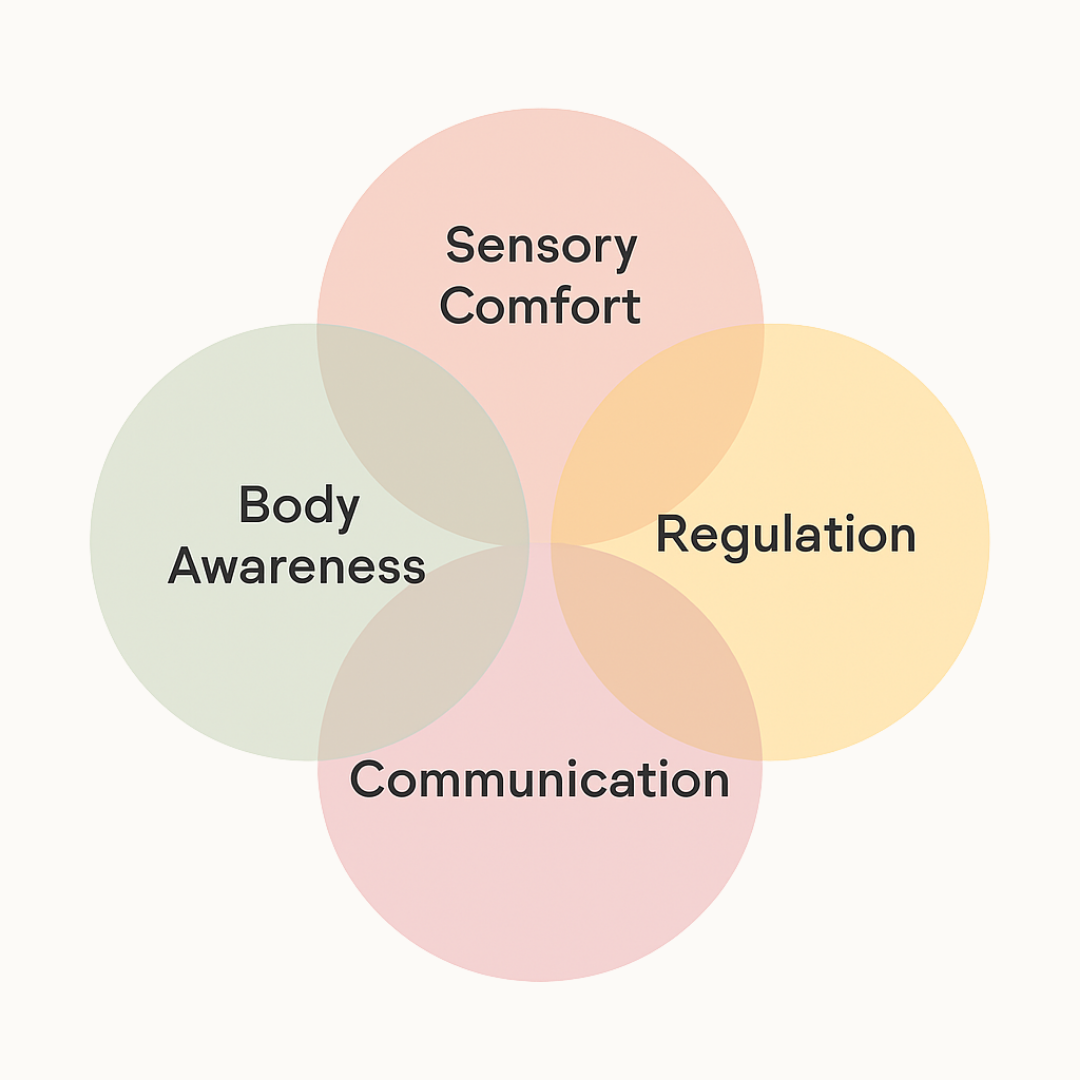
Every child learns toileting in their own way and on their own timeline. For neurodivergent children, toileting is not just about motivation or readiness by age—it involves body awareness, sensory comfort, communication, and emotional regulation. With the right supports, children can build toileting skills in a way that feels safe, respectful, and developmentally appropriate.
Understanding Toileting as a Developmental Skill
Toileting requires the integration of multiple skills, including awareness of bodily signals (interoception), sensory tolerance for the bathroom environment, communication of needs, and the ability to pause activities and regulate emotions. These skills develop at different rates for each child.
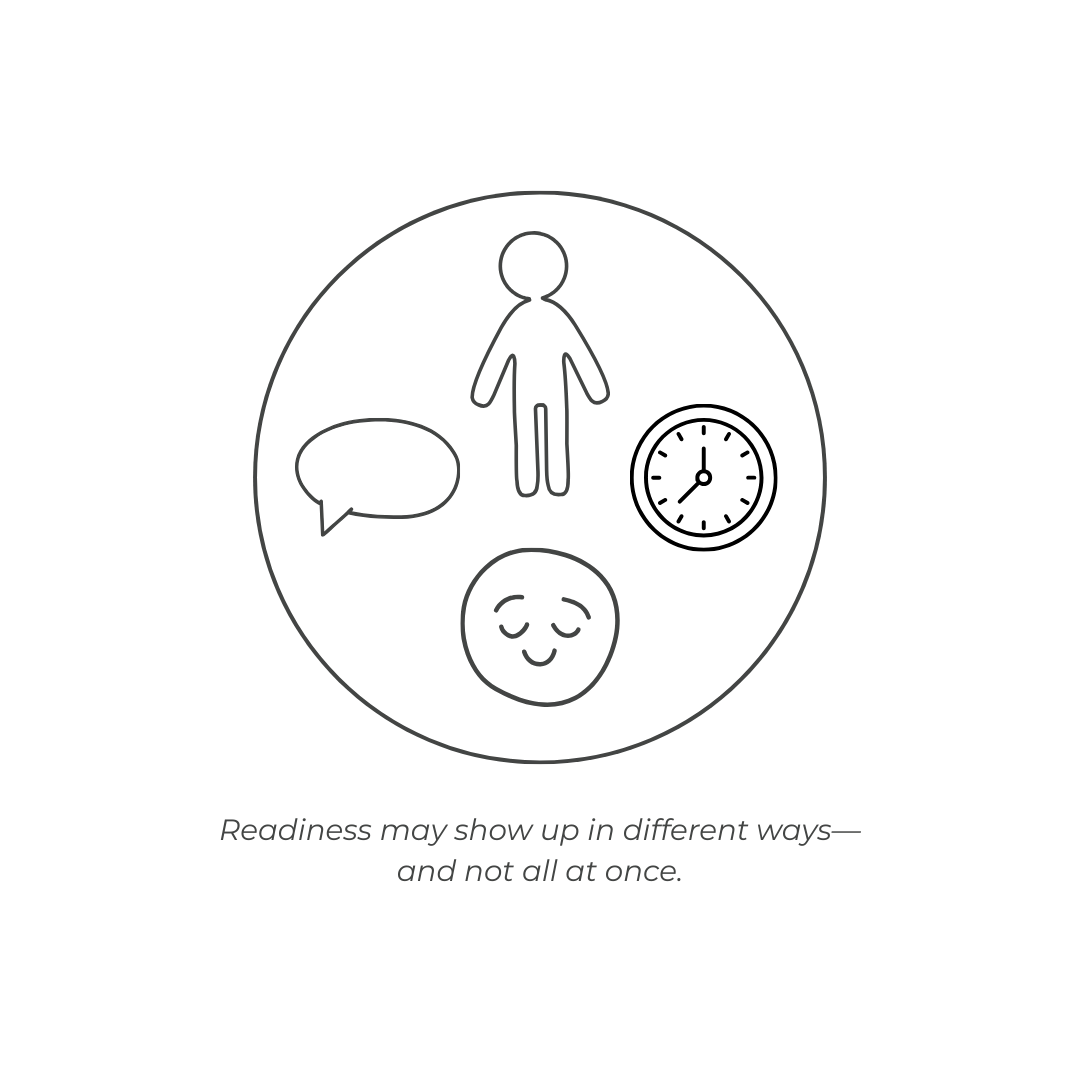
Children may show readiness in many different ways, including:
Noticing bodily signals before or after using the bathroom
Communicating needs through words, signs, gestures, or behavior
Tolerating the sensation of sitting on the toilet
Pausing an activity to move to the bathroom with support
Progress looks different for every child. Growth is success—not perfection.
Readiness Comes Before Expectations
Creating Calm & Predictable Routines
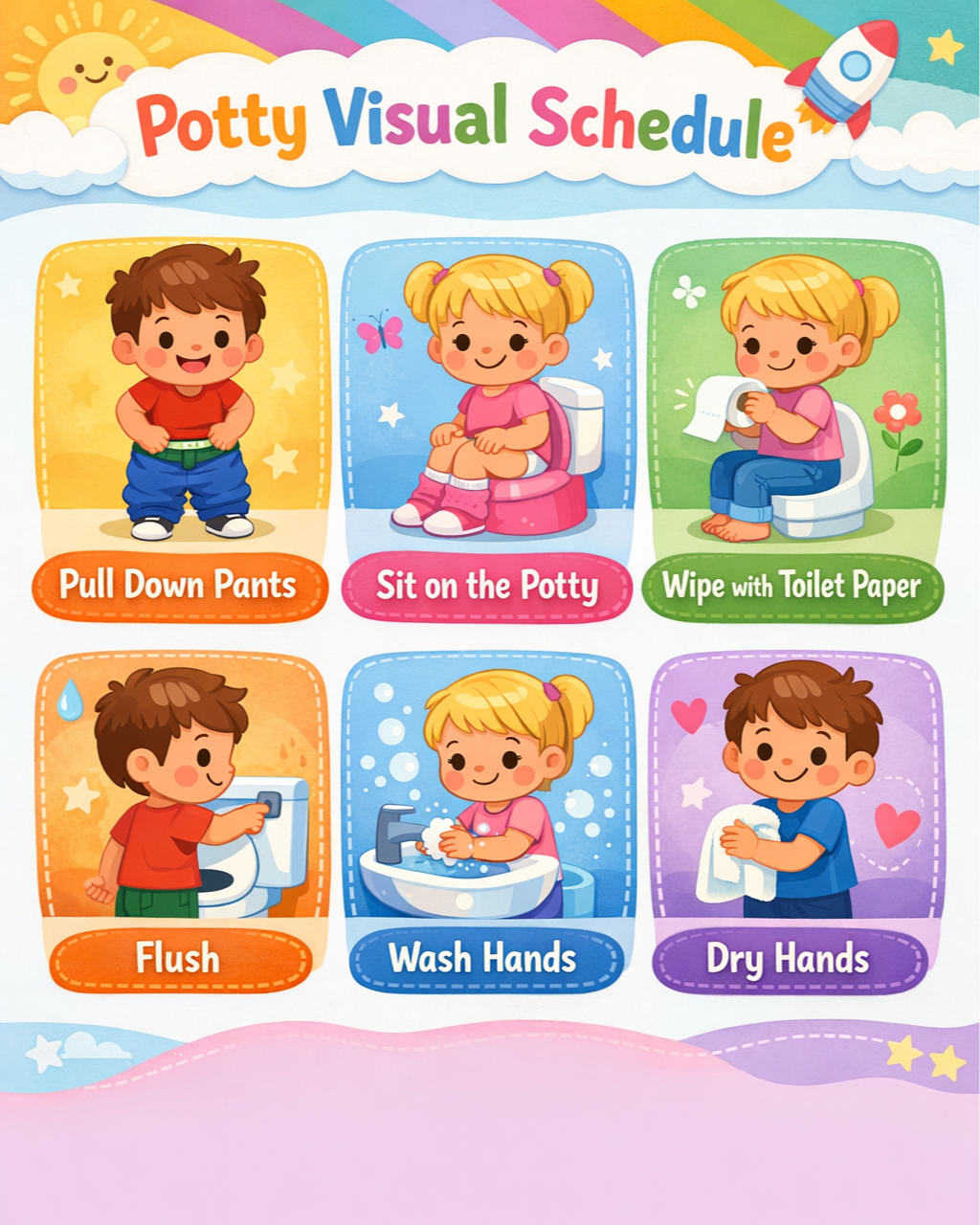
Consistent routines support comfort, regulation, and success with toileting. Predictable steps help reduce uncertainty and support learning, especially for children who benefit from structure.
Helpful strategies include:
Consistent toileting times
Visual schedules or timers
Clear, simple narration of steps
Preparing the bathroom environment in advance
Sensory & Comfort Supports
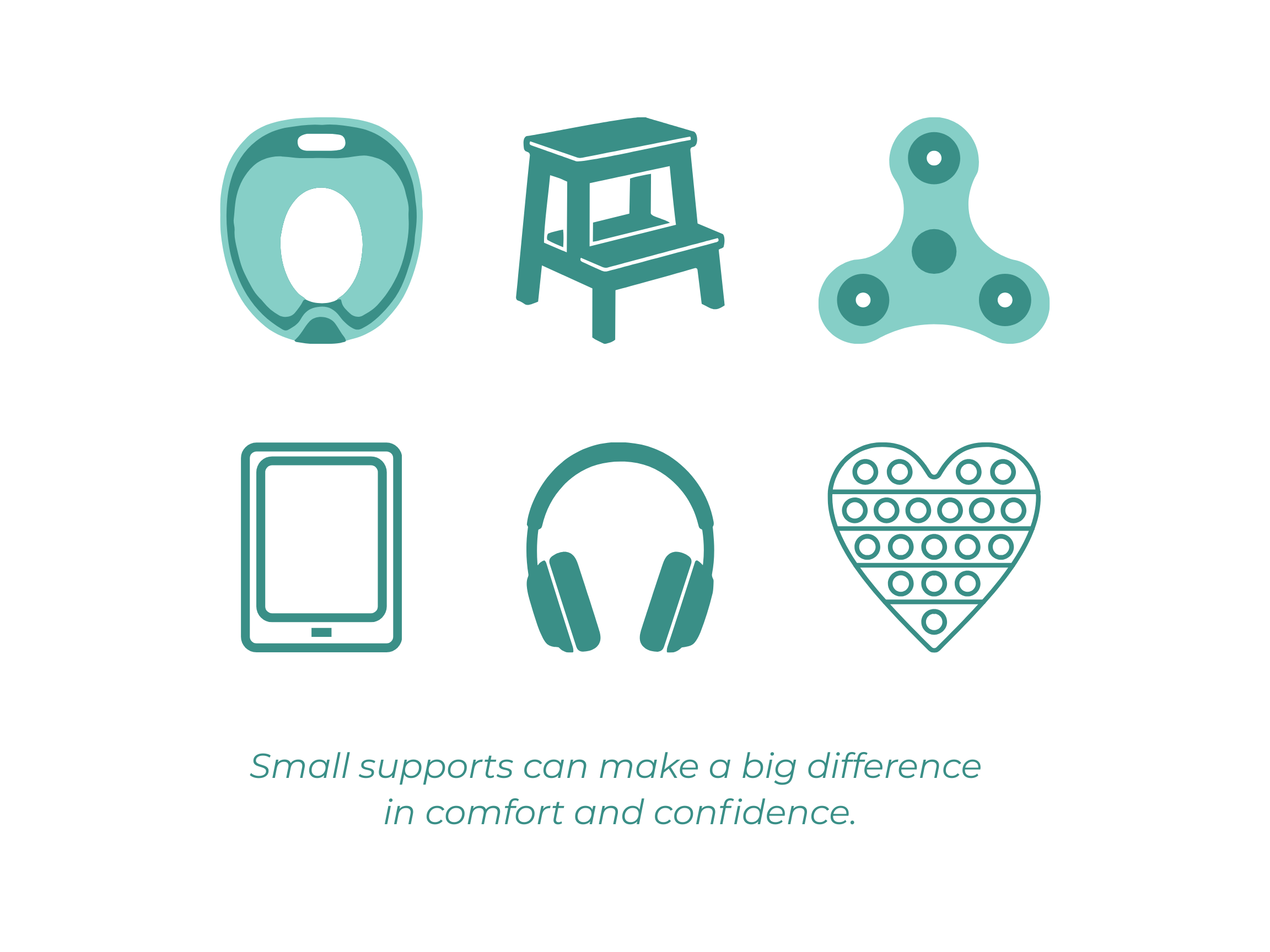
For many neurodivergent children, the bathroom can feel overwhelming. Sensory supports can make toileting more accessible and comfortable.
Consider:
Preferred potty chair or seat insert
Foot support for stability
Noise reduction tools
Comfort or fidget items
Clothing that feels comfortable and familiar
The goal is to make the bathroom feel safe and supportive.

When Accidents Happen
Accidents are a normal part of learning. When they happen:
Stay calm and matter-of-fact
Prioritize comfort during cleanup
Offer reassurance and return to the routine
A regulated adult response supports continued learning.

Communication & Understanding
Clear, consistent communication supports toileting success:
Use simple words, pictures, or signs
Pair language with visuals or gestures
Notice nonverbal cues
Offer choices when possible
Praise communication attempts
Communication comes before independence. Expressing a need is a key foundation for toileting success.
Support & Accomodations
Some children benefit from additional supports or accommodations, such as:
Sensory-based occupational therapy
Developmentally appropriate behavioral support
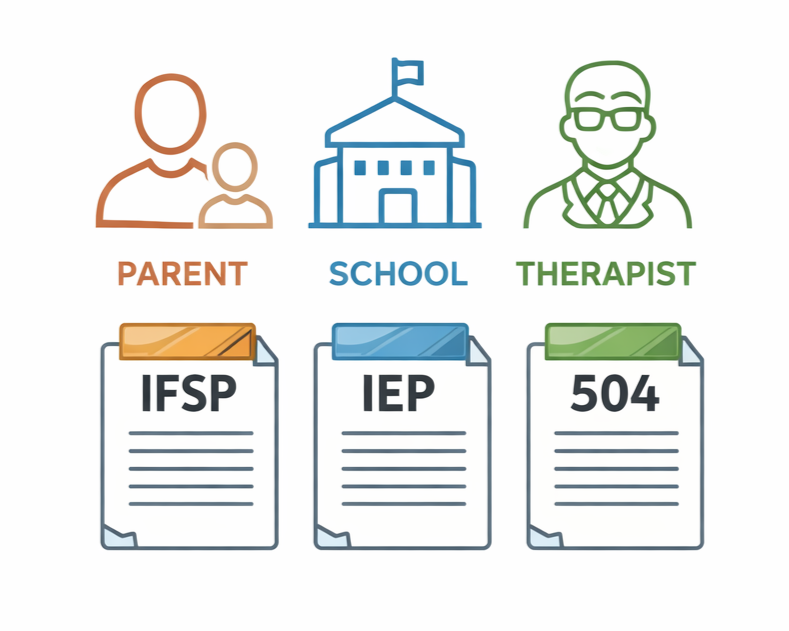
School-based plans (IFSP, IEP, or 504)
Needing support does not mean a child—or parent—is failing. It means needs are being respected and supported.
Toileting is a journey, not a race. With patience, consistency, and the right supports, neurodivergent children can build toileting skills in ways that honor their strengths and dignity.
Printables
-
Toileting & Independence
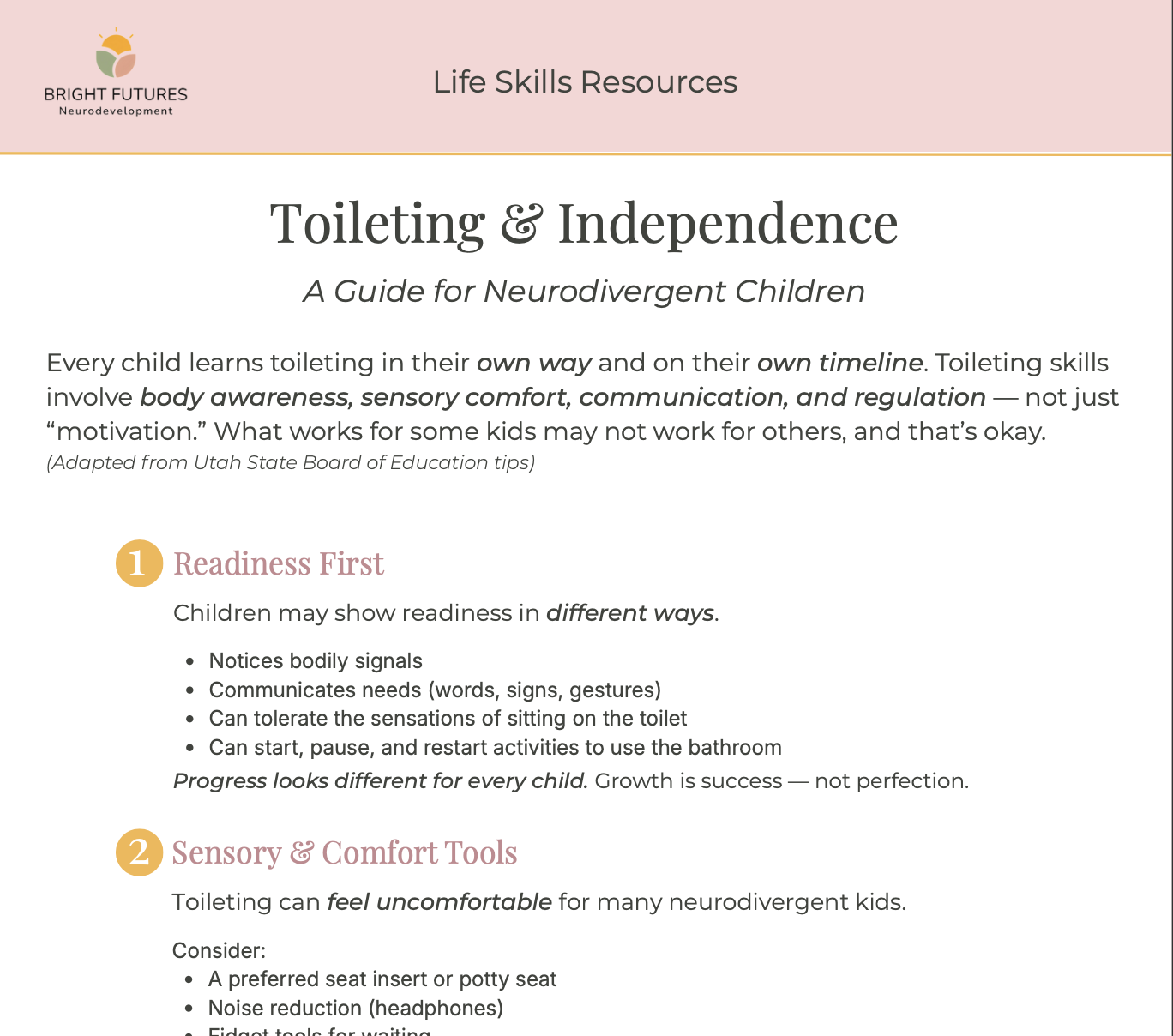
This handout offers practical, neurodivergent-affirming guidance for supporting toileting skills, including readiness signs, sensory supports, routines, and accommodations.