
Printables
-
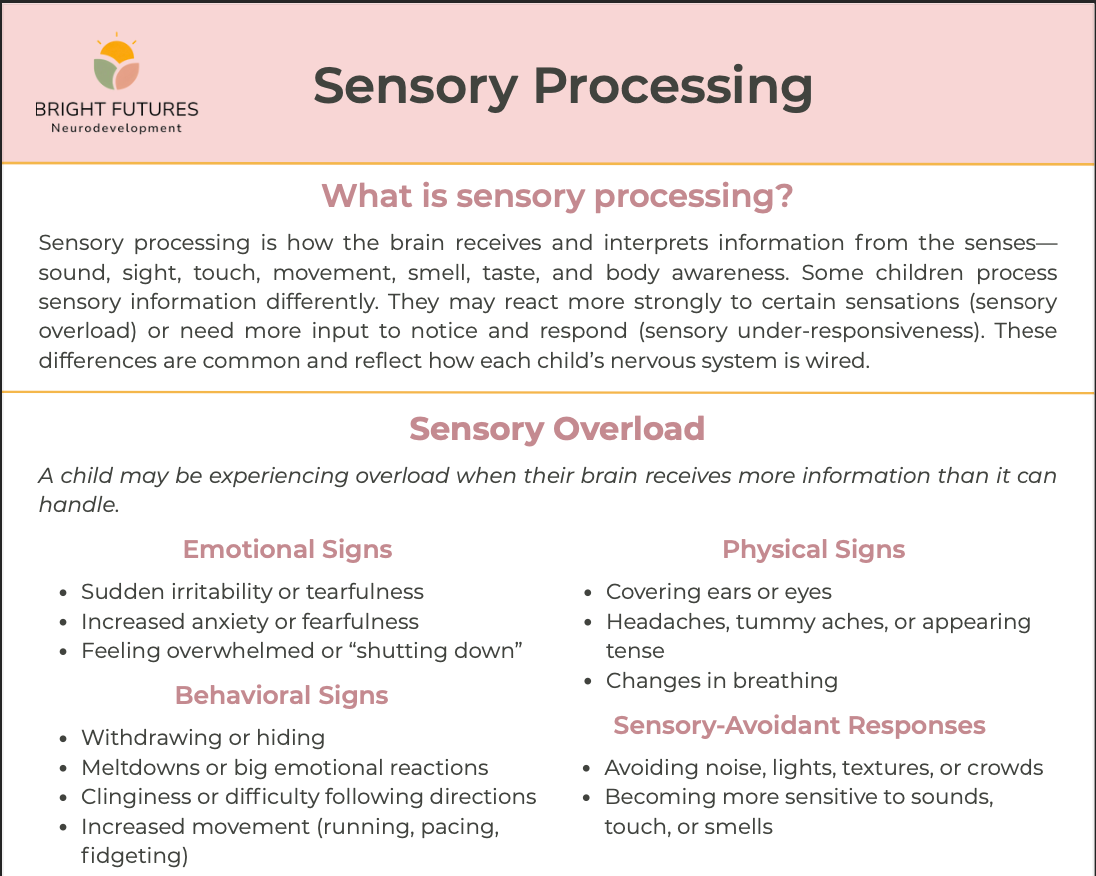
Sensory Processing (General) Handout
A quick, easy-to-read guide that explains sensory processing, signs of sensory overload and under-responsiveness, and practical strategies to support regulation at home and school.
More information about Sensory Processing:
Resources → Topics Areas → Daily Life, Routines, & Independence → Sensory Processing
-
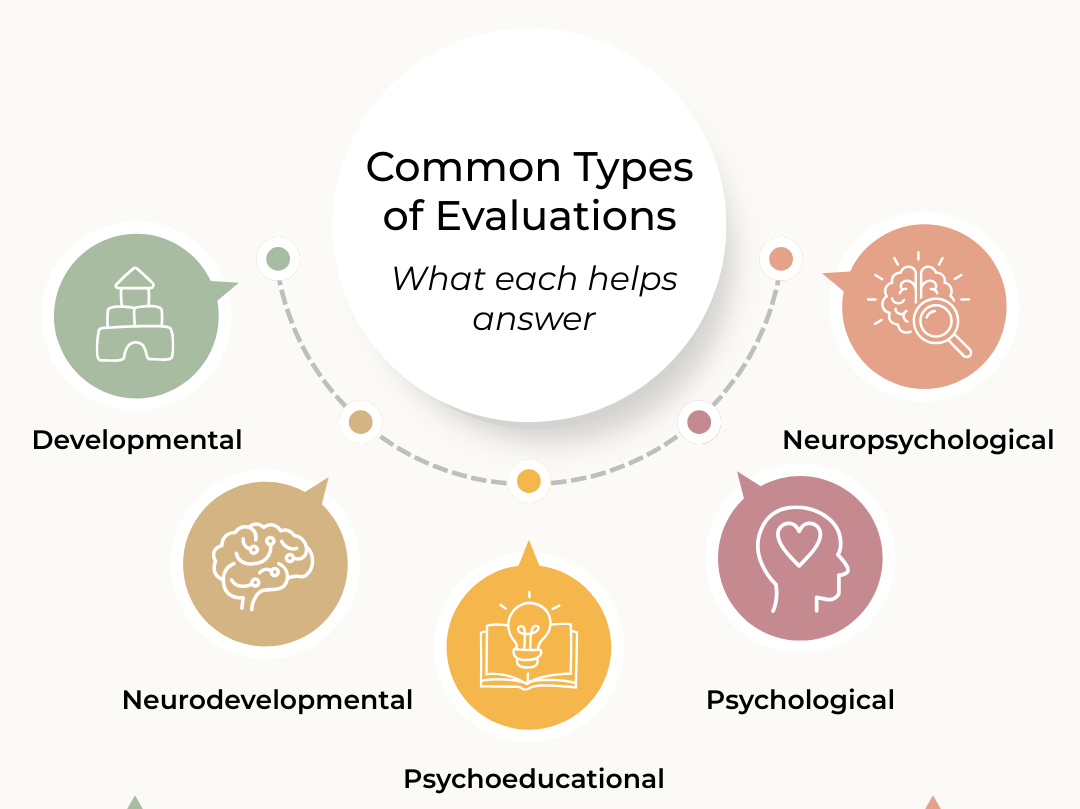
Types of Evaluations
This visual shows common types of evaluations — including developmental, neurodevelopmental, psychological, psychoeducational, and neuropsychological — so parents can see what each assessment focuses on and how it can help their child.
-
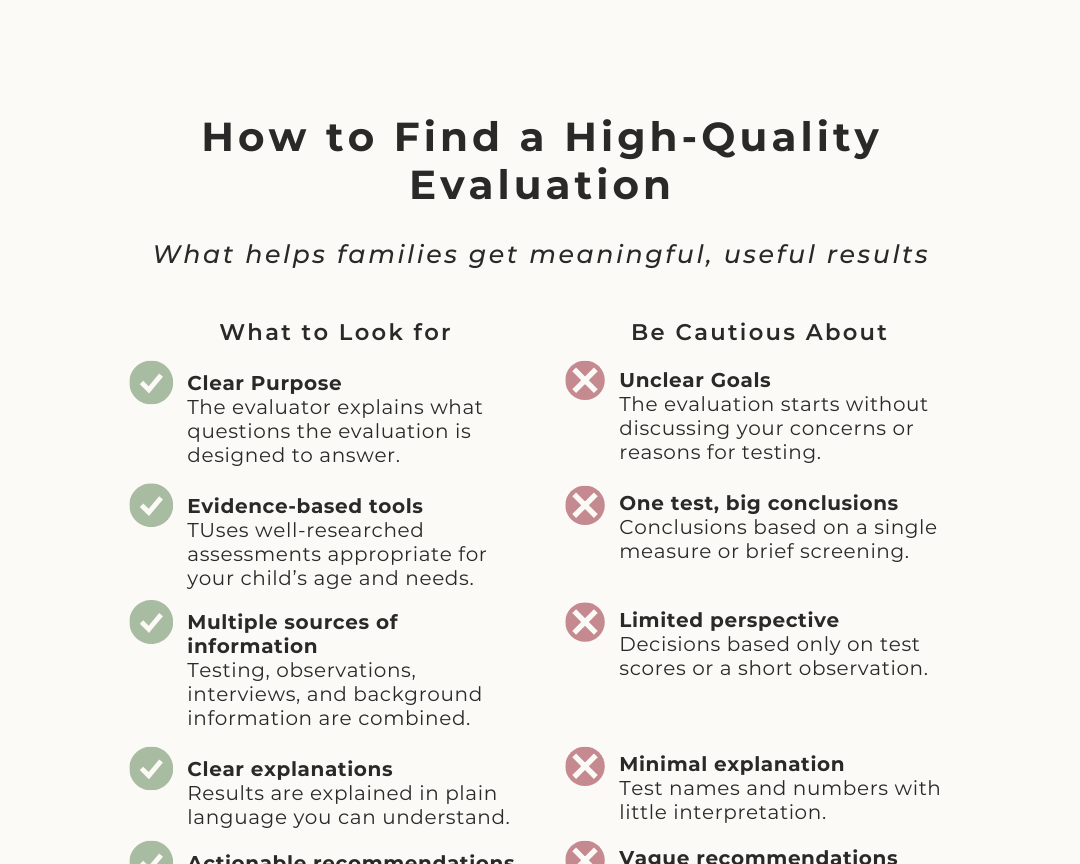
Quality Evaluations
See what makes an evaluation trustworthy and effective, and learn what to watch out for — helping you feel confident in choosing the right provider for your child.
-
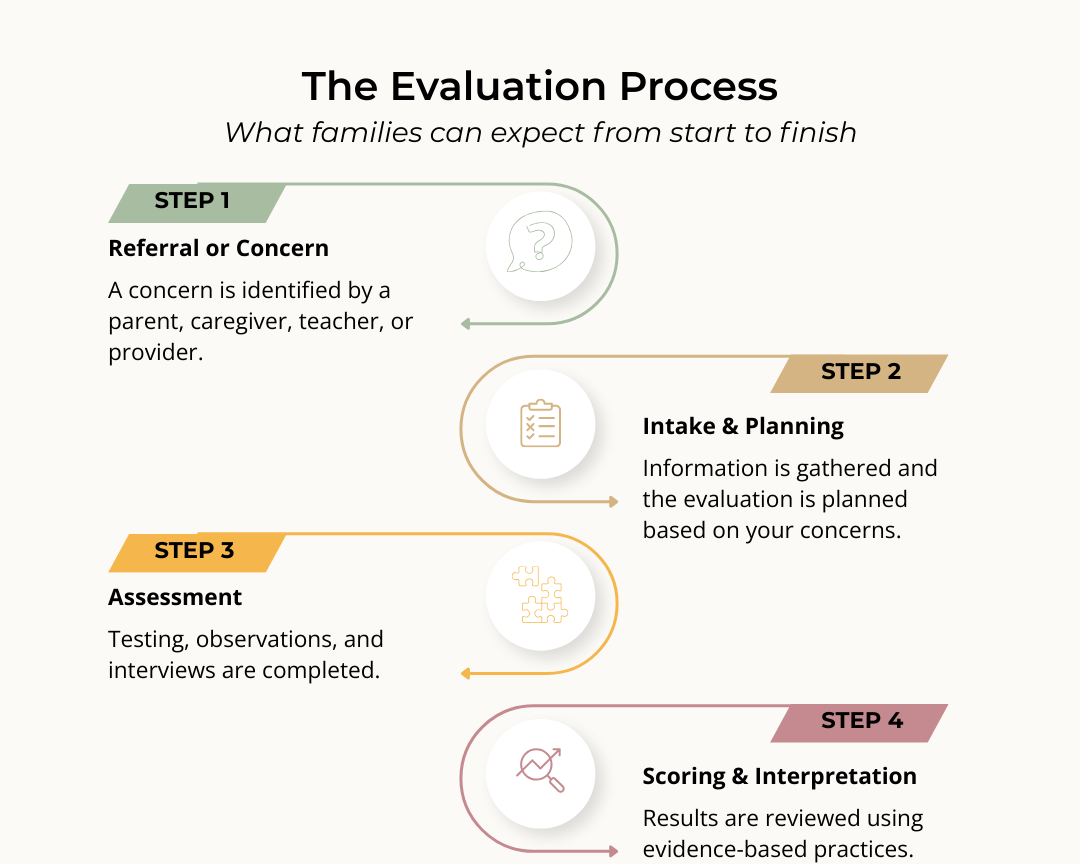
The Evaluation Process
This visual shows what to expect during a child’s evaluation, from referral and intake to assessment, feedback, and recommendations — helping families feel prepared and confident throughout the process.
-
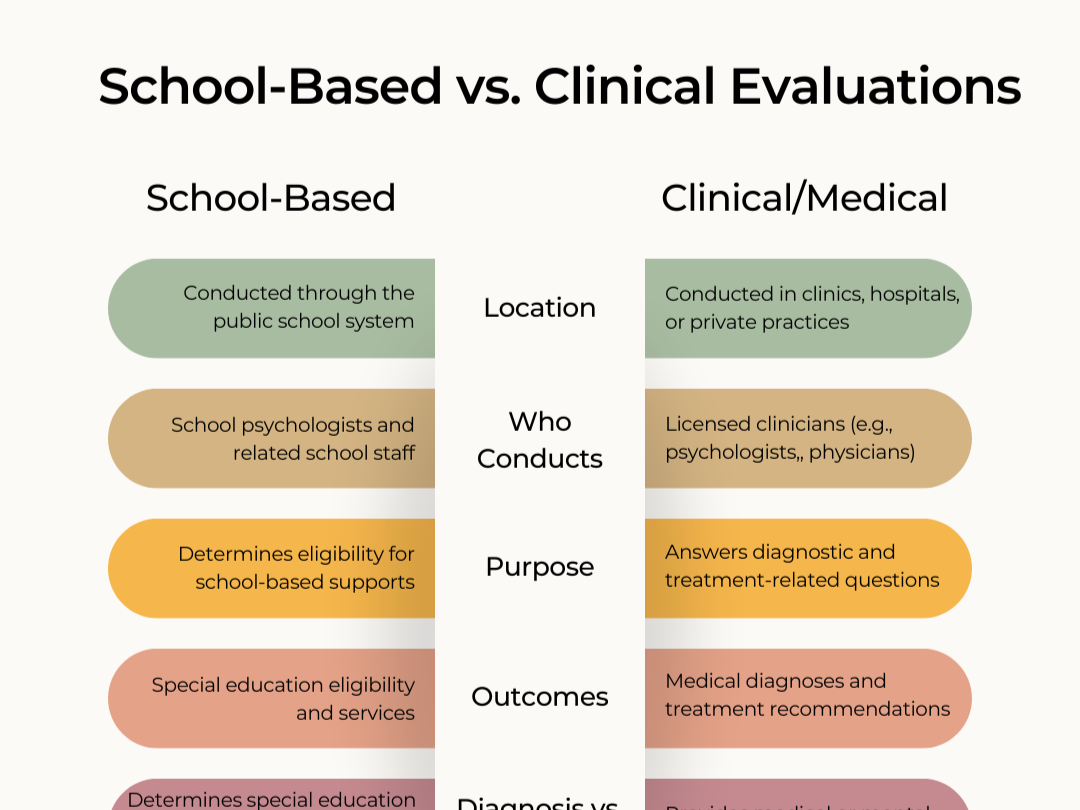
School-Based vs. Clinical Evaluations
See the key differences between school-based evaluations (to access educational supports) and clinical/medical evaluations (to get diagnoses and guide therapies), so you can better understand which might be right for your child.
-
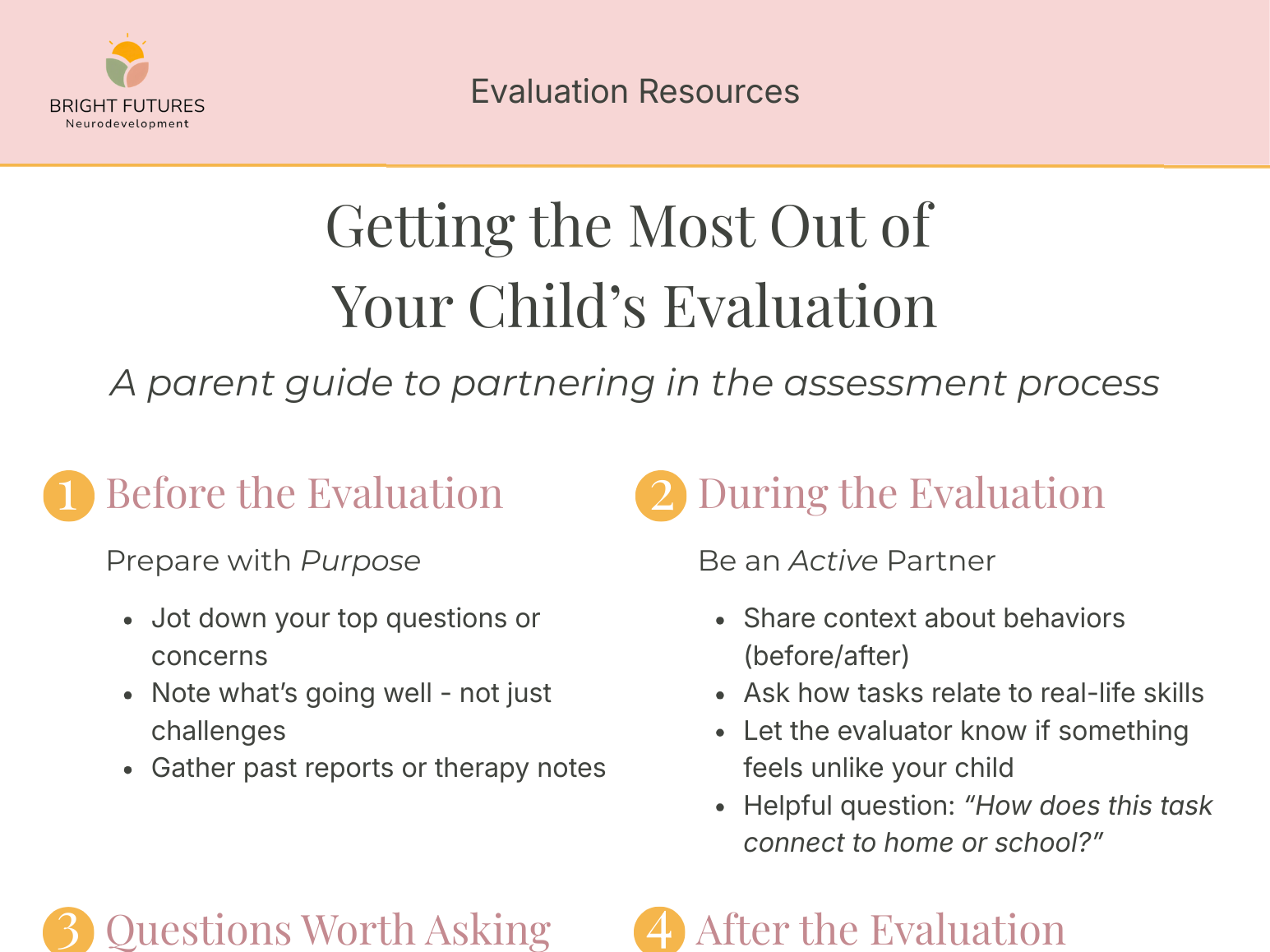
Getting the Most Out of Your Child's Evaluation
"Getting the Most Out of Your Child’s Evaluation" is a practical, parent-focused guide to help families prepare for, participate in, and understand their child’s assessment. With clear tips, key questions to ask, and guidance for before, during, and after the evaluation, this handout empowers caregivers to be active partners in the process and make the results meaningful for everyday life.