
Supporting Yourself So You Can Support Your Neurodivergent Child
A practical, neurodiversity-affirming guide for parents who feel overwhelmed but want to help.
Parenting a neurodivergent child requires more than love and effort—it requires emotional flexibility, nervous system awareness, and realistic expectations. When parents are supported, children benefit. This page offers practical ways to reduce overwhelm and create meaningful change at home.
Why Supporting Parents Matters

Reframing Thoughts That Increase Stress
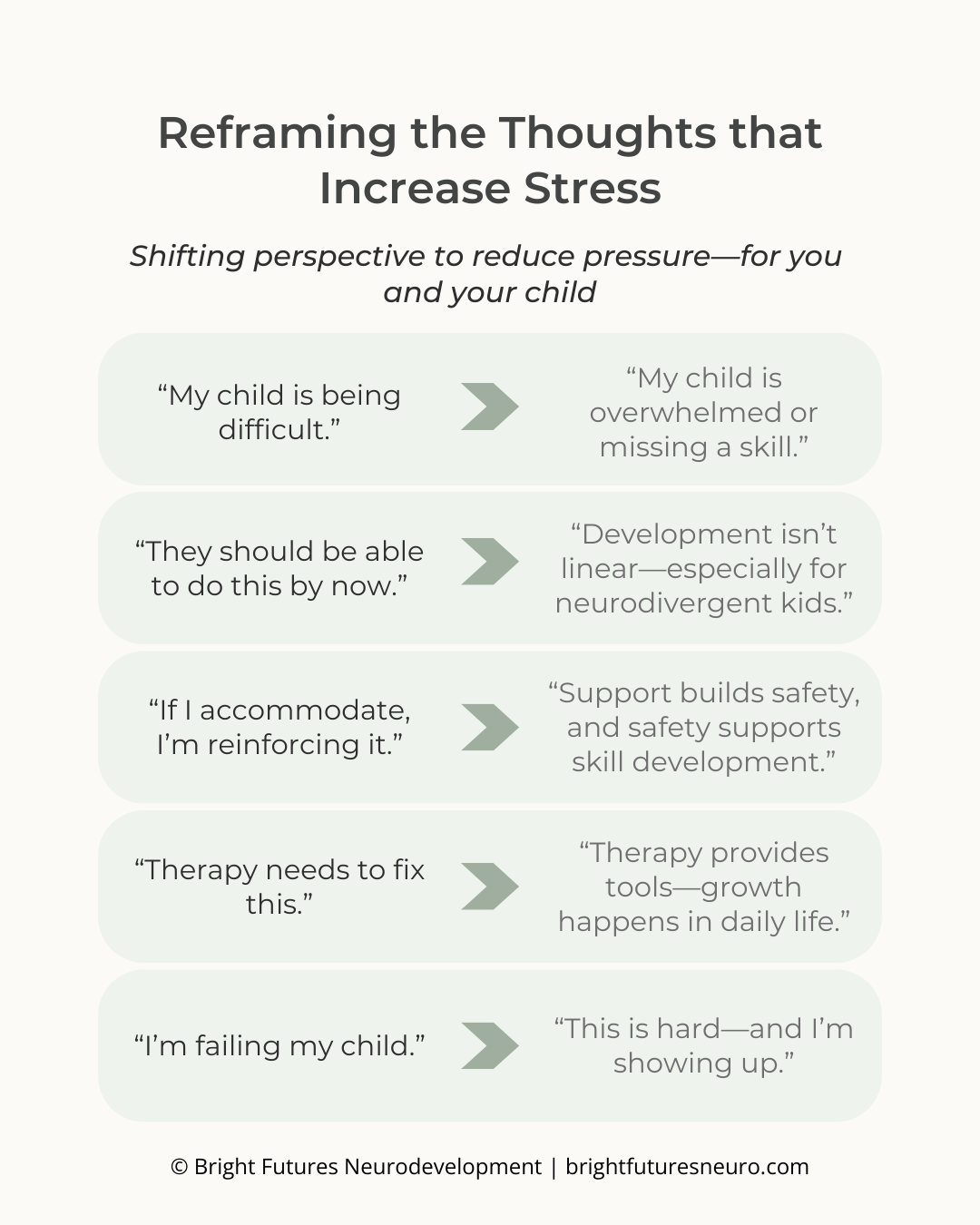
Parenting a neurodivergent child can feel overwhelming. It’s easy to get caught in self-critical or urgent thoughts that increase stress—like “They should be able to do this by now” or “I’m failing my child.”
At Bright Futures, we believe that how you think about challenges shapes your ability to respond calmly and effectively. Shifting from unhelpful thoughts to supportive reframes can reduce pressure for both you and your child, helping you feel more grounded and present.
Here are some common thoughts parents have—and ways to reframe them:
1. “My child is being difficult.”
→ “My child is overwhelmed or missing a skill.”
2. “They should be able to do this by now.”
→ “Development isn’t linear—especially for neurodivergent kids.”
3. “If I accommodate, I’m reinforcing it.”
→ “Support builds safety, and safety supports skill development.”
4. “Therapy needs to fix this.”
→ “Therapy provides tools—growth happens in daily life.”
5. “I’m failing my child.”
→ “This is hard—and I’m showing up.”
Tip: Take a moment to pause and ask yourself: “Is this thought helping me or increasing pressure?”
Even small shifts in perspective can make your parenting experience more manageable, joyful, and connected.
Behavior as Communication
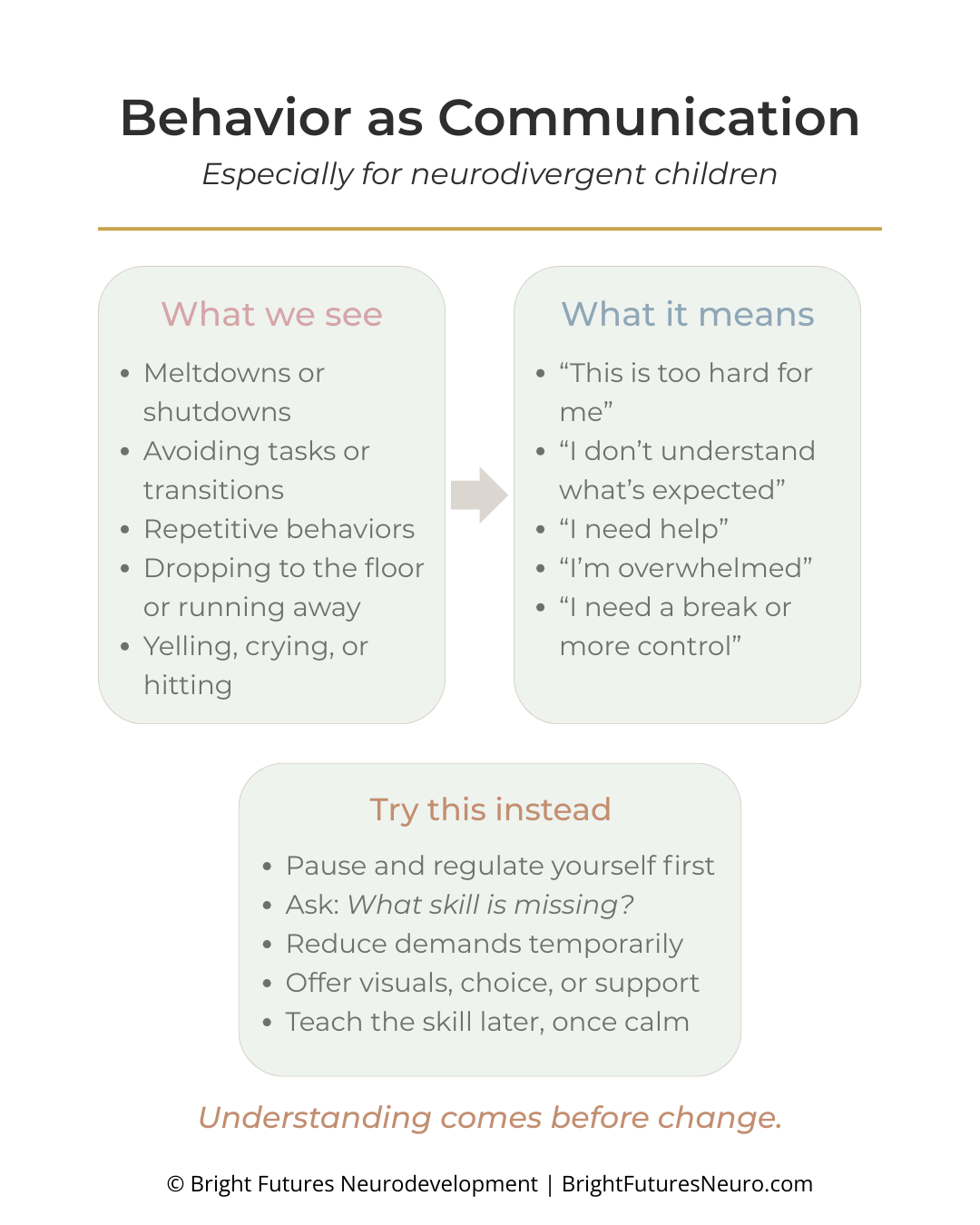
When a child’s behavior feels confusing, intense, or disruptive, it’s often a sign that something meaningful is being communicated—especially for neurodivergent children who may have differences in language, sensory processing, or emotional regulation.
Behavior is not something to eliminate or control. It is information.
Children communicate through their bodies long before they can communicate through words. Changes in behavior may reflect unmet needs, sensory overload, fatigue, difficulty with transitions, or challenges expressing wants and feelings. When we shift from asking “How do I stop this?” to “What is my child telling me?” we open the door to understanding and support.
Viewing behavior as communication allows parents to:
Look beneath the behavior to identify patterns and triggers
Respond with curiosity instead of urgency or frustration
Adjust the environment, expectations, or supports rather than the child
Build trust by showing the child they are heard and understood
This approach does not mean allowing unsafe behavior or removing all boundaries. It means responding in ways that prioritize regulation, safety, and connection before correction.
When children feel understood, their need to communicate through distress often decreases. Over time, this understanding supports the development of language, emotional awareness, and self-regulation—at a pace that honors the child’s individual nervous system and strengths.
Before asking how to stop a behavior, ask what the behavior may be communicating.
Therapy Is a Tool—
Not the Whole Plan
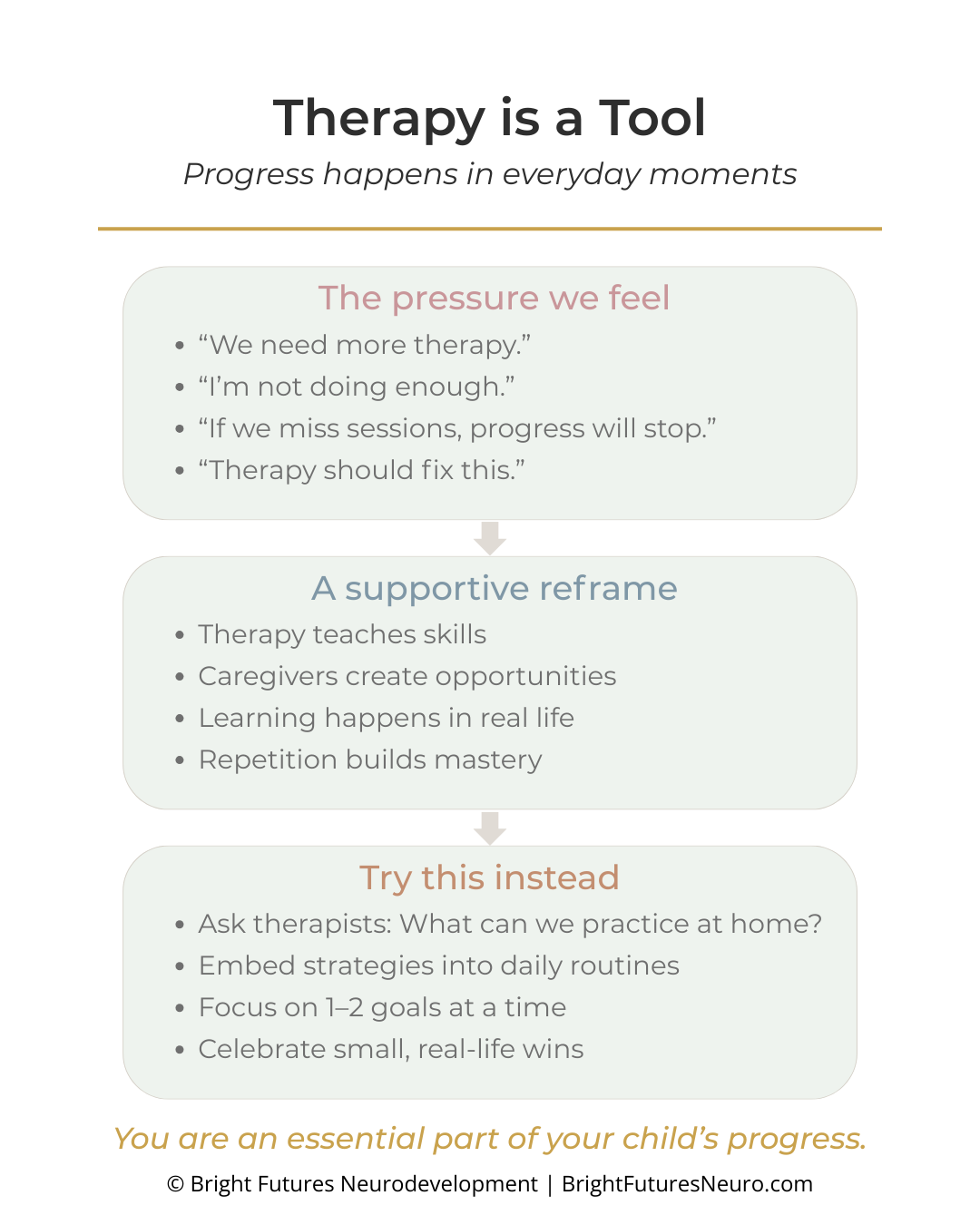
Therapy can be an important support for neurodivergent children and their families—but it is not something that fixes a child. Children are not broken. Therapy works best when it is viewed as a tool that supports development, not a solution that replaces everyday connection and caregiving.
The most meaningful progress doesn’t happen only in therapy sessions. It happens in daily routines, during play, at the dinner table, and in moments of regulation and repair. Therapy is most effective when strategies are carried into real life in ways that feel realistic and sustainable for families.
Reframing therapy as a tool helps parents:
Focus on applying a few strategies consistently rather than doing everything
Use everyday interactions as opportunities for growth
Reduce pressure to “catch up” or see immediate change
Build confidence in their own role as a key support for their child
Instead of asking, “Is therapy doing enough?” a more supportive question becomes,
“How can I use what we’re learning in ways that fit our family?”
Progress happens through alignment—between the child, the family, and the strategies being used—not through intensity or perfection. Small, consistent actions over time create meaningful change.

Play and Connection Drive Development
Play is not optional—it is foundational. Through play and connection, neurodivergent children build language, attention, emotional regulation, and secure attachment.
Following your child’s interests—even when play looks repetitive or unconventional—supports brain development and learning readiness.
Parent Nervous System Care
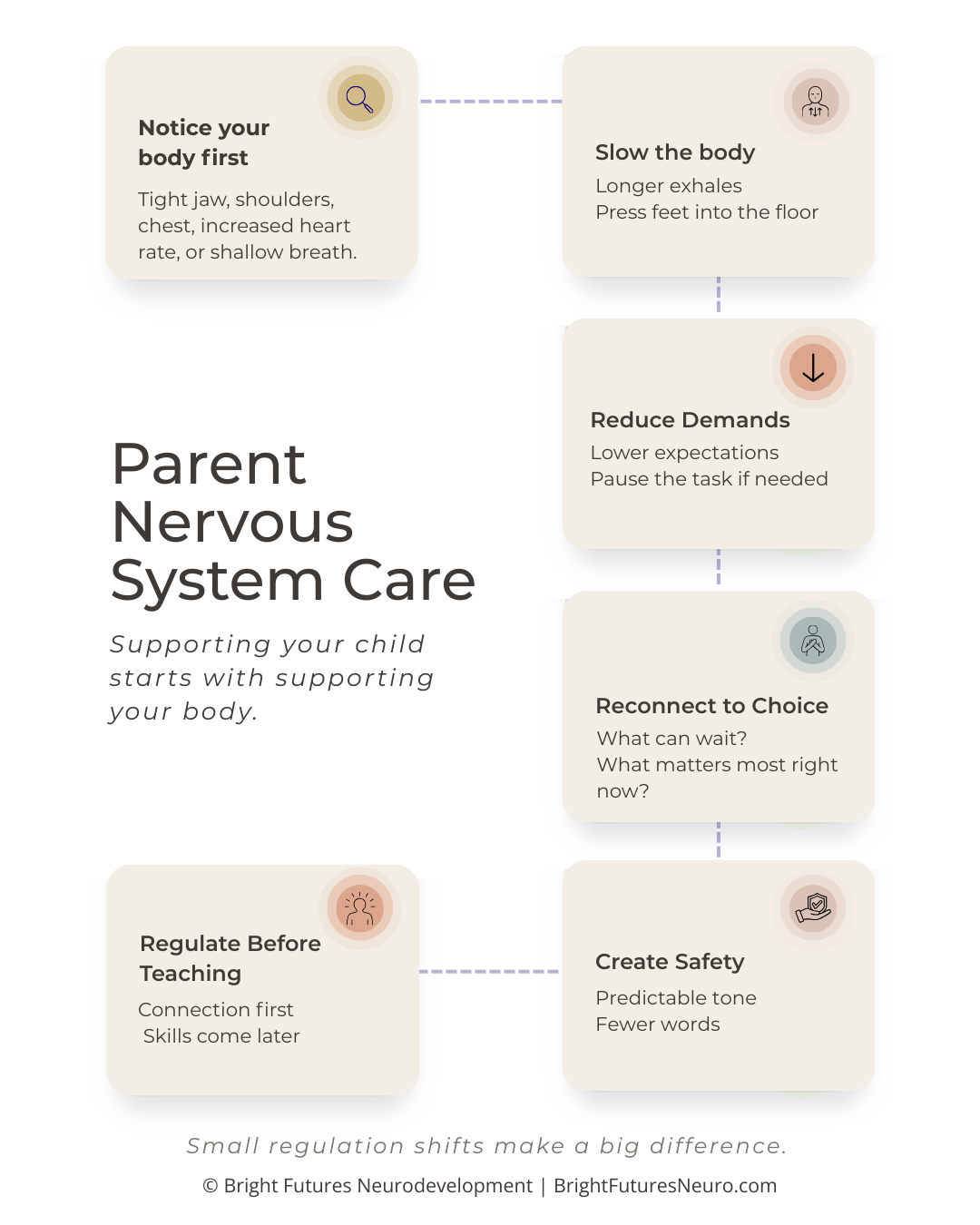
When a child is struggling, parents often feel it in their bodies first—tight shoulders, shallow breathing, racing thoughts, or a sense of urgency to fix what’s happening. This is not a failure of coping. It’s a nervous system responding to stress.
Children—especially neurodivergent children—co-regulate with the adults around them. When a parent’s nervous system is overwhelmed, even the most evidence-based strategies can feel hard to access or apply. Supporting a child’s regulation begins with supporting the caregiver’s.
Parent nervous system care is not about staying calm at all times or suppressing emotion. It’s about noticing when your body is activated, understanding what you need in that moment, and making small adjustments that create safety and stability for both you and your child.
This might look like:
Noticing physical signs of tension before responding
Pausing or reducing demands during moments of stress
Using a predictable tone, fewer words, and slower movement
Prioritizing connection before teaching or correcting
Choosing one supportive strategy and using it consistently
Regulation is a process, not a skill you either have or don’t have. Supportive action can happen even when the stress hasn’t fully passed. Over time, these small moments of awareness and adjustment build greater resilience—for you and for your child.
When parents feel more grounded, children feel safer.
And when safety comes first, learning and growth can follow.
Regulation isn’t about doing it perfectly. It’s about creating enough safety to move forward.
From Overwhelming Thoughts to Supportive Action
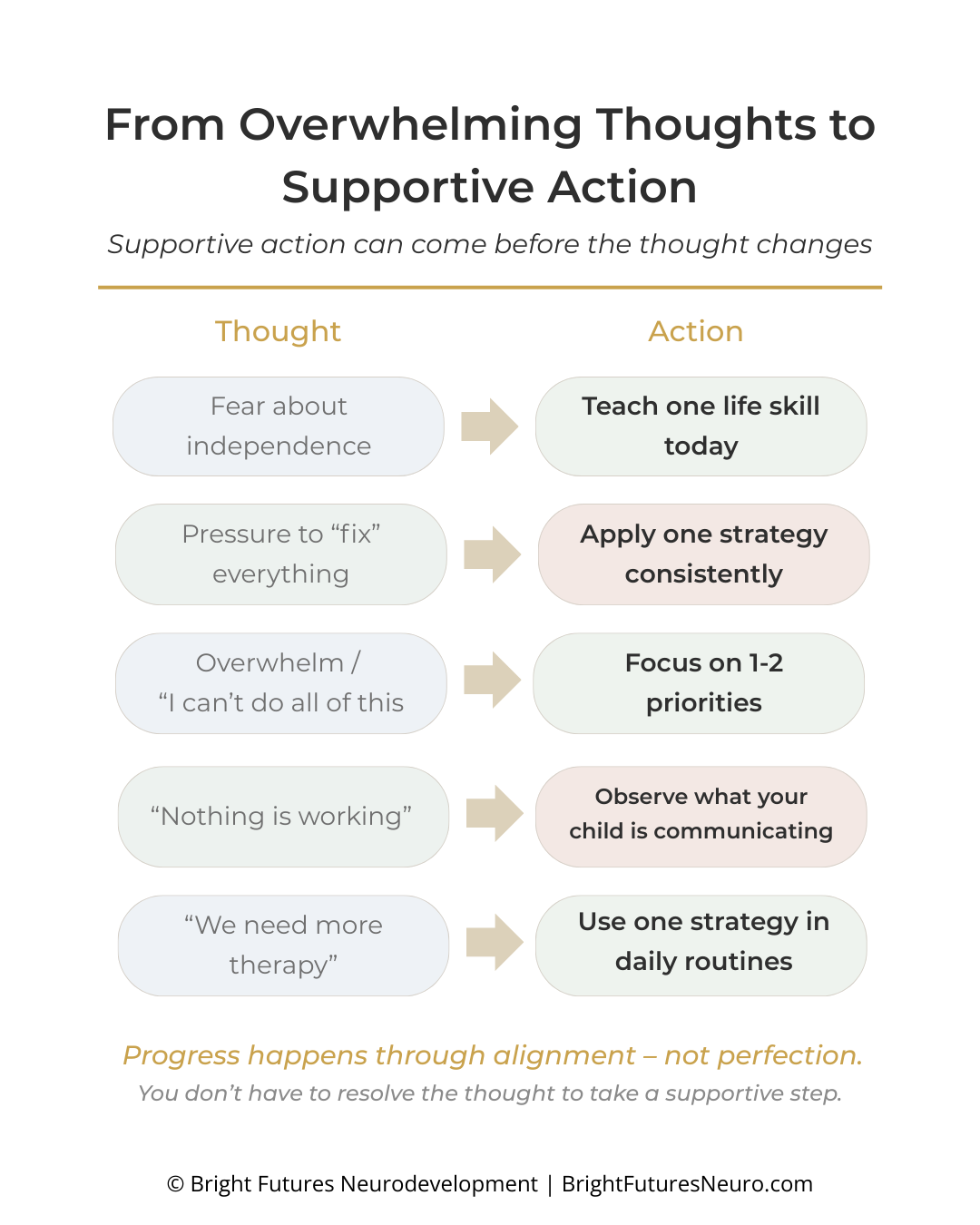
When parents feel stuck, clarity matters more than motivation. Translating overwhelming thoughts into small, realistic actions helps reduce stress and build momentum.
Examples:
Fear about independence → Teach one life skill
Pressure to “fix” → Apply one strategy consistently
Overwhelm → Focus on 1–2 priorities
Progress happens through alignment—not perfection.
You don’t have to do everything—and you don’t have to do this alone. Small shifts in mindset, nervous system care, and daily action can meaningfully support both you and your child.
Printables
-
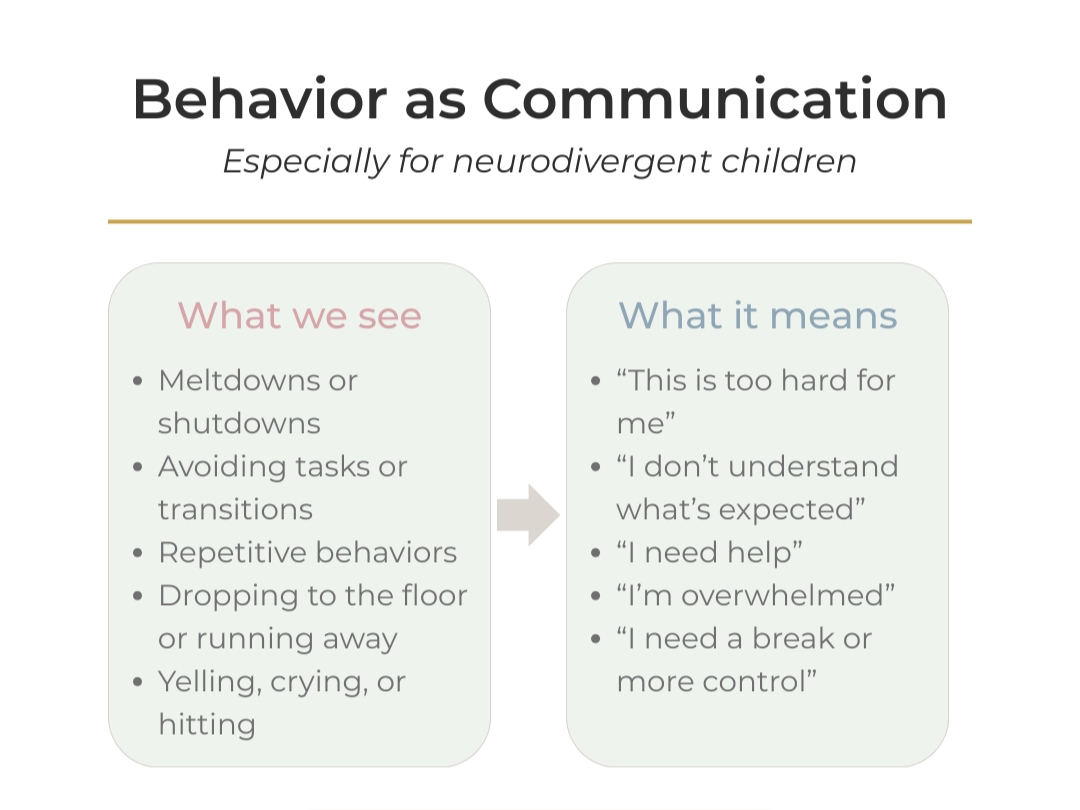
Behavior as Communication
A supportive framework for understanding behavior as information rather than defiance. This printable helps parents slow down, notice patterns, and respond with curiosity—especially during moments of stress or confusion.
-
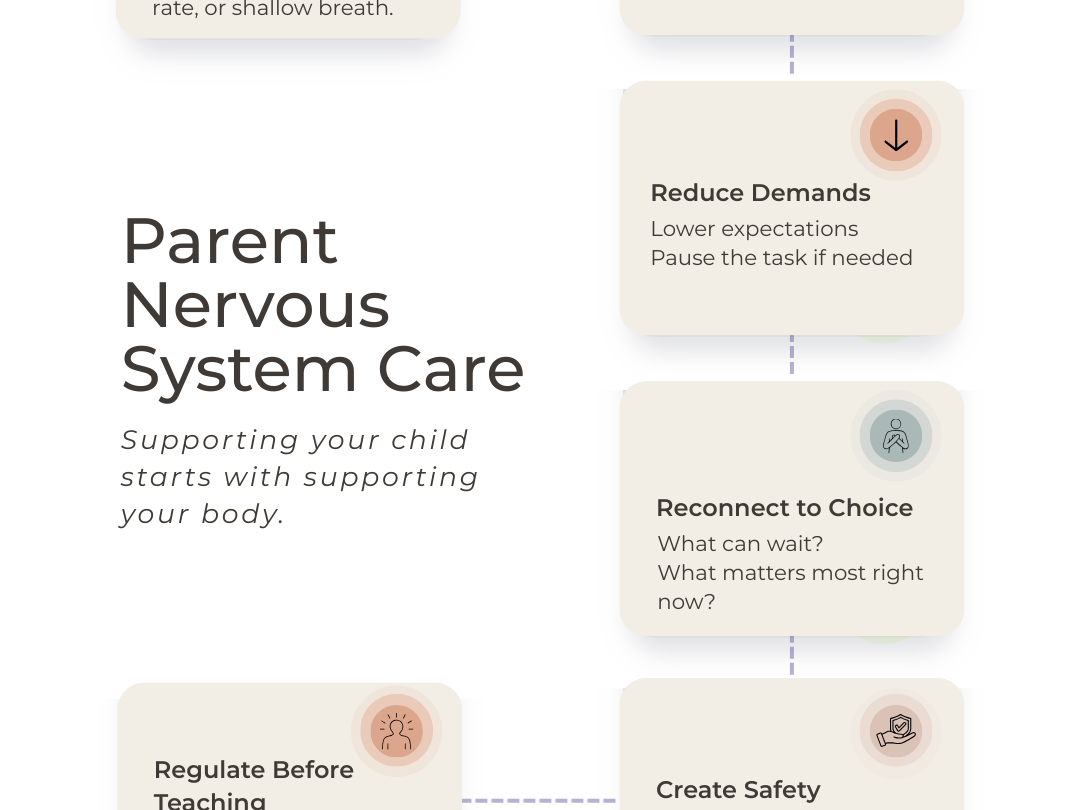
Parent Nervous System Care
A gentle, body-based guide to help parents notice stress signals and choose small supports that create safety and regulation. This resource focuses on awareness, pacing, and connection—without pressure to stay calm or do it perfectly.
-
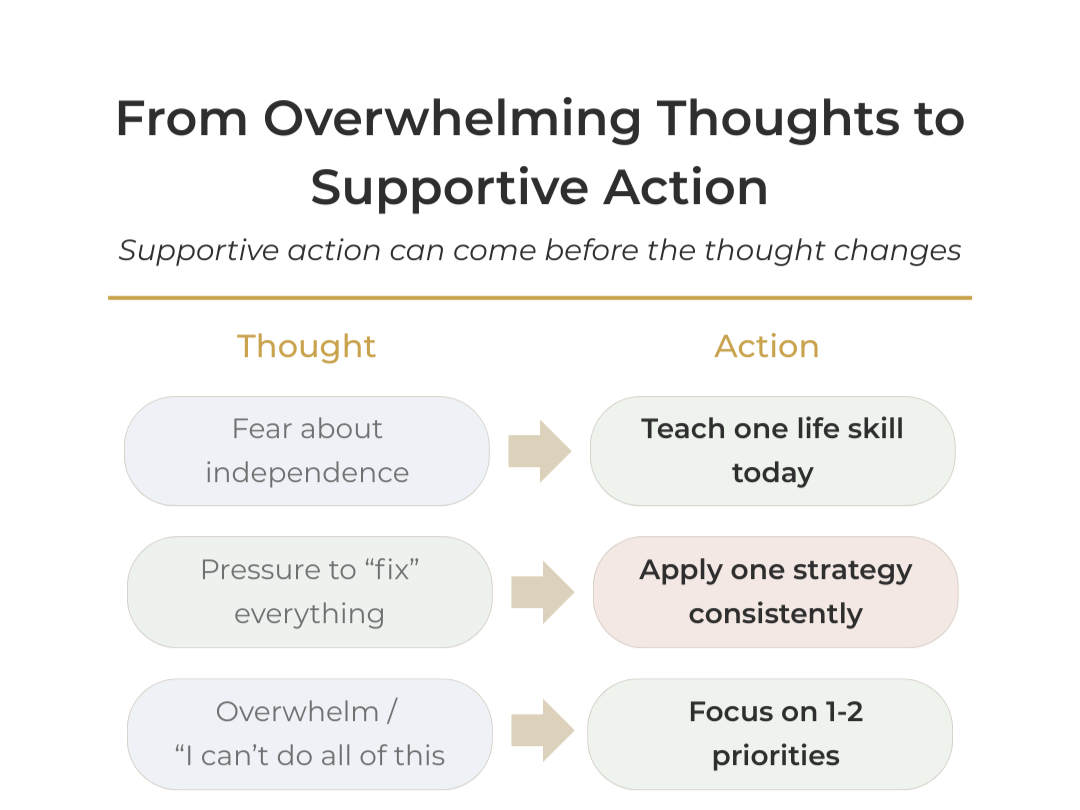
From Overwhelming Thoughts to Supportive Action
A simple translation tool that helps parents move from stress-driven thoughts to realistic, supportive actions. Designed to reduce overwhelm and support progress through clarity—not perfection.
-
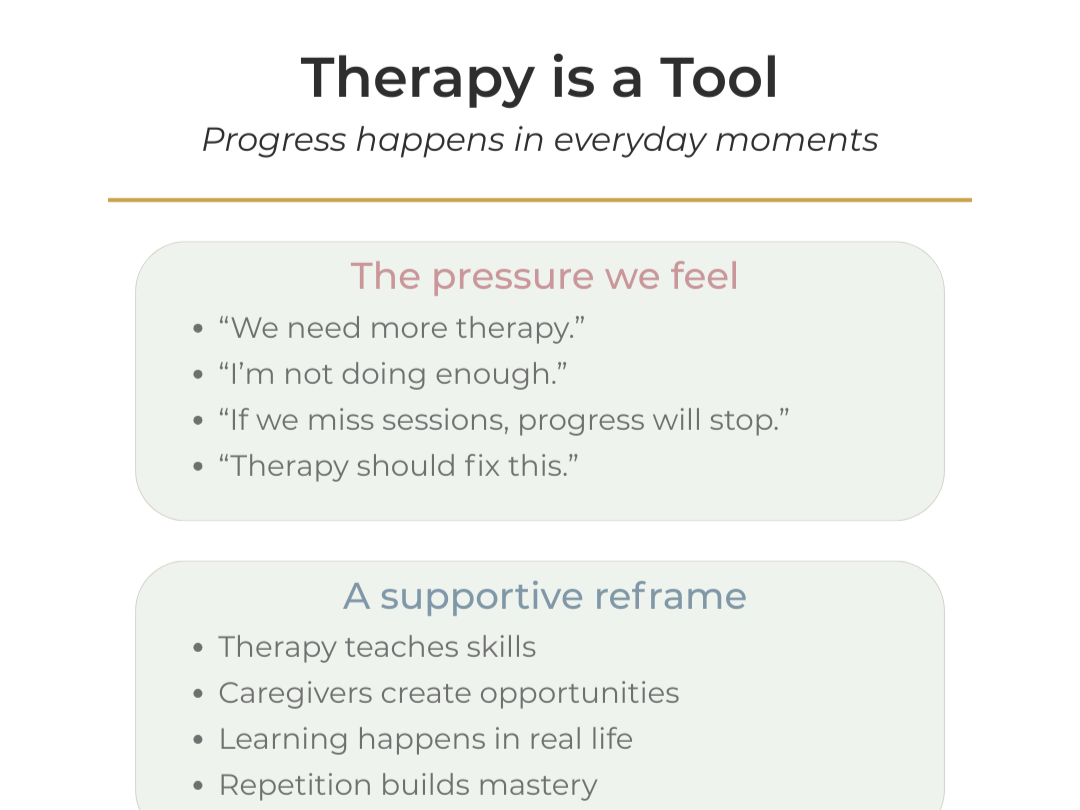
Therapy Is a Tool
A reframing resource that clarifies how therapy supports development best when strategies are applied consistently in daily life. This printable encourages a balanced, sustainable approach that centers the child and the family.