

Sensory Processing
Sensory needs vary widely between children. Some seek big movement, others avoid noise, and many fall somewhere in between. These tools help families understand their child’s sensory profile and support regulation at home, school, and in the community.
What is Sensory Processing?
Sensory processing is the way the brain receives, organizes, and responds to information from the world around us. Every moment, children take in sensations through their senses—sight, sound, touch, taste, smell, movement, and body awareness. For most kids, the brain filters and interprets this information automatically so they can focus, play, and learn.
For some children, sensory messages can feel too strong, too weak, or confusing. This can make everyday situations—like getting dressed, going to the store, or hearing loud sounds—feel overwhelming or unpredictable. Differences in sensory processing are common in young children, especially those with autism, ADHD, developmental delays, or anxiety.
Sensory differences are not “bad” or “misbehavior.” They reflect how a child’s nervous system is wired and how they experience the world. With understanding, supportive strategies, and sometimes guidance from an occupational therapist, children can learn to navigate sensations with more confidence and comfort.
Signs of Sensory Overload
Sensory overload happens when a child receives more sensory input than their brain can process at once. This can build up gradually or happen suddenly, depending on the environment, the child’s stress level, and the type of sensations involved.
-
Sudden irritability or tearfulness
Increased anxiety or fearfulness
Feeling overwhelmed or “shutting down”
Quick mood changes or emotional outbursts
-
Withdrawing, hiding, or trying to escape a situation
Meltdowns or big emotional reactions
Clinginess or seeking extra reassurance
Difficulty following directions or staying focused
Increased movement such as pacing, running, jumping, or fidgeting
-
Covering ears or eyes
Complaints of headaches or tummy aches
Appearing tense, stiff, or uncomfortable
Changes in breathing (faster, shallow, or sighing)
-
Avoiding certain sensations (noise, bright lights, touch)
Seeking deep pressure, squeezing, or movement to cope
Becoming more sensitive to textures, sounds, or smells
Overload isn’t a choice—it's a sign that a child’s nervous system needs a break, a quieter space, or sensory support. Recognizing the early signs helps adults step in with calming strategies before a child reaches their limit.
Signs of Sensory Under-Responsiveness
Sensory under-responsiveness happens when a child’s brain doesn’t register sensory information as quickly or intensely as expected. Instead of reacting strongly to sounds, touch, movement, or other sensations, the child may seem unusually calm, passive, or slow to respond. These children often need more noticeable, longer, or stronger sensory input to fully take in what’s happening around them. Under-responsiveness is common in young children and can affect attention, participation, and safety—especially if they don’t notice discomfort, danger, or cues from others. Understanding early signs helps caregivers provide the right support and sensory experiences throughout the day.
-
Appearing unusually calm or passive in situations that typically prompt a reaction
Slow responses to emotional cues (may seem “unbothered” or hard to engage)
Limited awareness of discomfort (cold, hunger, mild injuries)
-
Difficulty noticing when someone calls their name
Slow to start tasks or activities without extra prompting
Seeming “in their own world” or easily drifting off during routines
Lower activity level or appearing tired even when well-rested
-
Covering ears or eyes
Complaints of headaches or tummy aches
Appearing tense, stiff, or uncomfortable
Changes in breathing (faster, shallow, or sighing)
-
(Under-responsiveness often leads kids to seek stronger input to “wake up” their system.)
Frequently bumping, crashing, jumping, or pushing into people/objects
Seeking tight hugs or squeezing
Chewing on clothing, toys, or objects
Constant movement—spinning, climbing, rocking, or fidgeting
Holding objects tightly or pressing hard when writing or drawing
Under-responsiveness isn’t a sign of laziness or lack of interest—it reflects how a child’s nervous system organizes information. Many children with under-responsive sensory systems benefit from predictable routines, movement breaks, and sensory activities that help “wake up” their bodies and minds. An occupational therapist can help identify a child’s unique sensory profile and recommend strategies to increase awareness, engagement, and comfort across home, community, and early learning settings.
Supporting a child’s sensory regulation means helping them find the balance between feeling overwhelmed and under-stimulated. Simple, consistent strategies at home and in early learning settings can make everyday routines calmer, safer, and more predictable. These ideas can be used for children who experience sensory overload, under-responsiveness, or both.
Home and School Strategies for Sensory Regulation
Home Strategies
1. Create Predictable Routines
Use visual schedules for morning, bedtime, and transitions.
Give gentle warnings before changes (“2 more minutes, then we clean up”).
Build in sensory breaks throughout the day.
2. Design Calming Spaces
Set up a quiet corner with soft lighting, pillows, weighted blankets, or noise-reducing headphones.
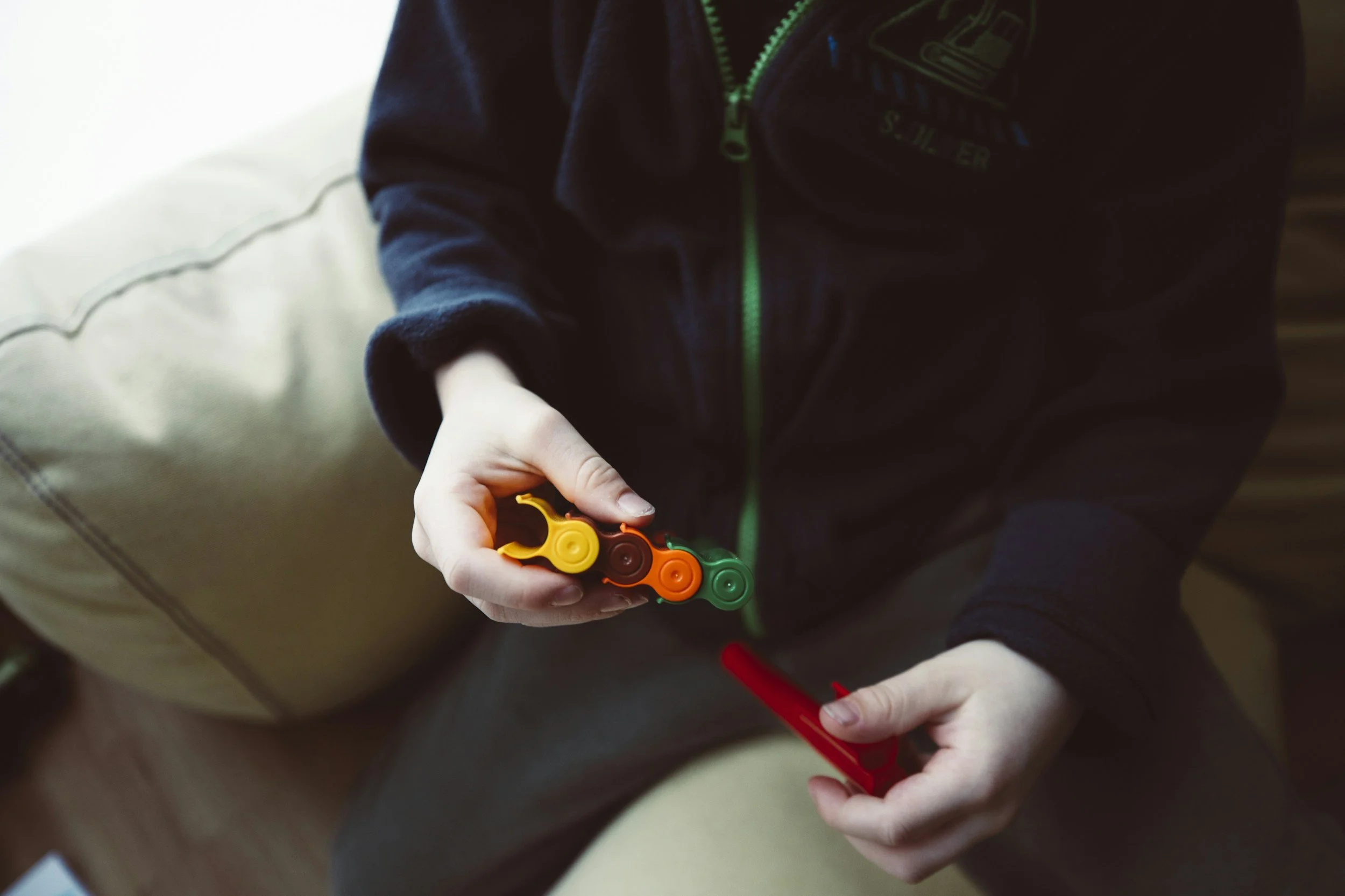
Use calming tools like books, fidgets, stuffed animals, or slow rhythmic movement activities.
3. Provide Sensory-Rich Activities
For movement seekers: jumping, trampoline time, animal walks, dance or obstacle courses.
For tactile input: playdough, water play, sensory bins, cooking activities, or finger painting.
For proprioceptive input (“heavy work”): pushing laundry baskets, carrying groceries, bear hugs, or helping with household chores that involve lifting or pulling.
4. Adjust the Environment
Dim lights, reduce background noise, or use soft music.
Offer clothing options that match your child’s sensory comfort (tags removed, softer fabrics).
Reduce clutter to help with visual regulation.
5. Support Mealtimes & Hygiene
Start with small sensory steps (e.g., touching new foods before tasting).
Use fun tools like silicone scrubbers, vibrating toothbrushes, or warm washcloths.
Offer choices when possible to promote comfort and control.
School Strategies
1. Build Predictable Classroom Structures
Use visual schedules and first/then boards.
Provide clear expectations and consistent routines.
Allow extra time for transitions (lining up, cleanup, switching activities).
2. Create a Sensory-Friendly Environment
Use flexible seating (wobble stools, beanbags, floor cushions).
Offer noise-reducing headphones or a quiet zone for breaks.
Adjust lighting (lamp lighting, natural light, or dimmer switches when possible).
3. Incorporate Movement Throughout the Day
Scheduled movement breaks or “brain breaks.”
Jobs involving “heavy work”: carrying books, stacking chairs, wiping tables, pushing carts.
Allow kids to stand, stretch, or wiggle during circle time or lessons.
4. Provide Sensory Tools
Fidgets, chewable items, weighted lap pads, or textured footrests.
Visual timers to support pacing and reduce overwhelm.
Access to calming tools like bubbles, pinwheels, or stress balls.
5. Support Sensory-Friendly Learning
Present directions in small steps.
Seat the child away from high-traffic/noisy areas.
Allow the child to preview activities or materials before starting.
Modify art or messy play (gloves, tools, alternative textures).
6. Collaborate With Support Staff
Work with the school’s occupational therapist to create an individualized sensory plan.
Align supports with IEP/504 accommodations when applicable.
Use consistent strategies across teachers, aides, and specialists.
Printables
-
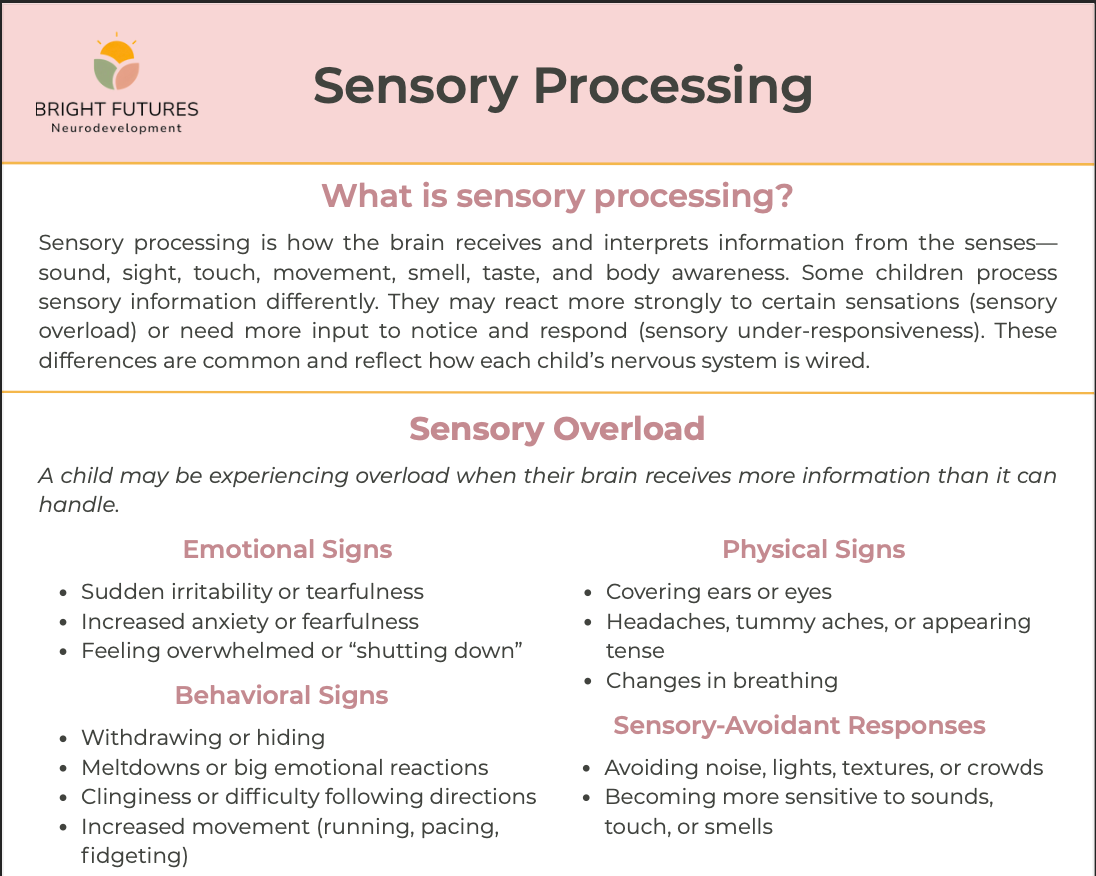
Sensory Processing Handout
A quick, easy-to-read guide that explains sensory processing, signs of sensory overload and under-responsiveness, and practical strategies to support regulation at home and school.