
Neurodiversity 101
Understanding Different Ways of Thinking, Learning, and Experiencing the World
At Bright Futures Neurodevelopment, we believe that differences in how children think, feel, learn, and regulate are not deficits — they are part of the natural diversity of the human brain.
You may have heard the term neurodivergent and wondered:
“Does this just mean autism or ADHD?”
“My child doesn’t seem autistic… so does this apply to us?”
“Is neurodivergence a diagnosis?”
Let’s break it down in a clear, parent-friendly way.
What is Neurodiversity?
Neurodiversity is the idea that brain differences are natural variations in human development — not diseases to be cured.
The human brain develops in many different ways. Some brains are considered “neurotypical” (developing in more common patterns), and others are “neurodivergent” (developing in less common but equally valid patterns).
Neurodivergent brains may process…
Sensory information
Attention
Language
Emotions
Social communication
Executive functioning
in unique ways.
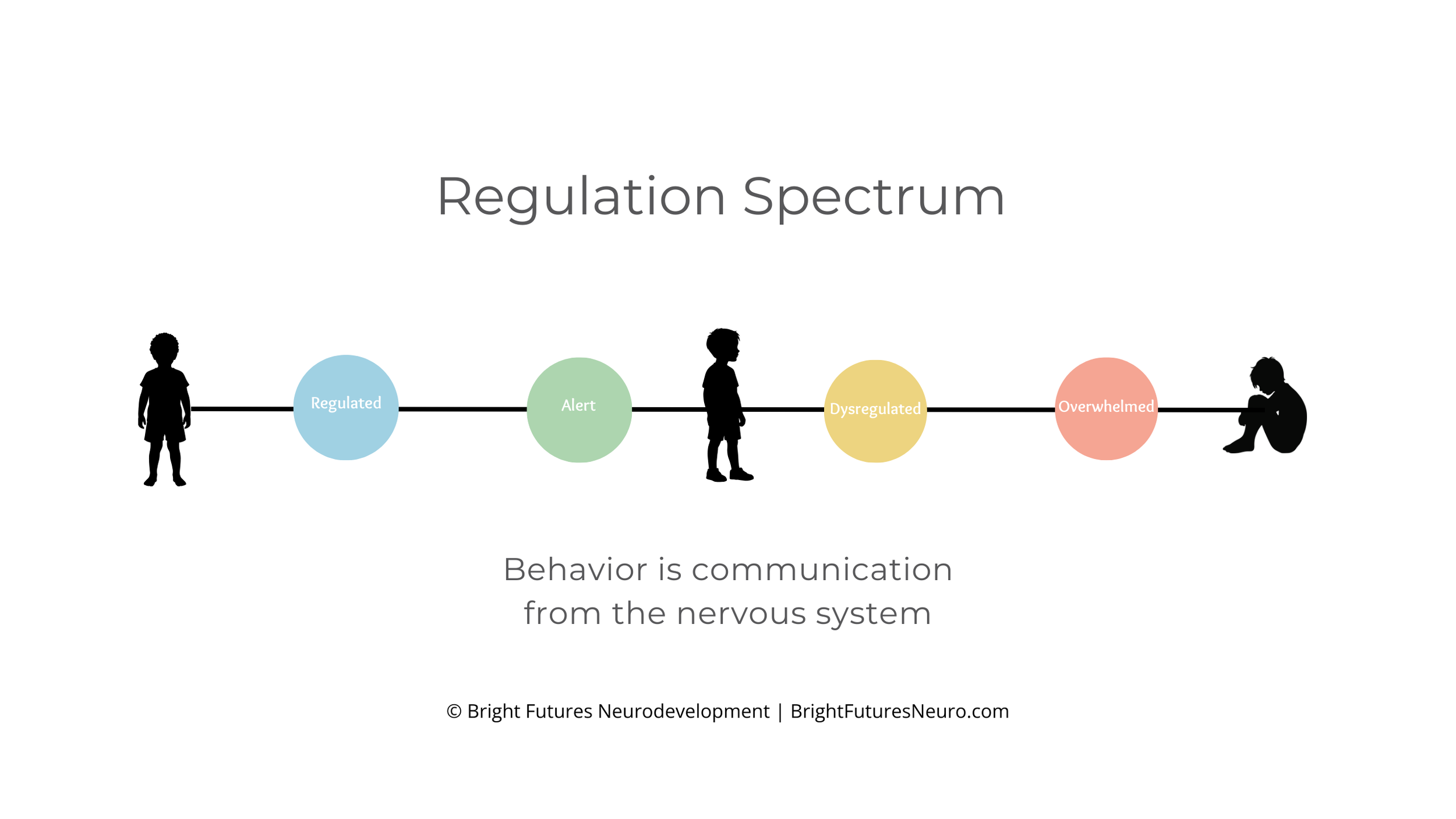
These differences are rooted in the nervous system — how the brain connects, regulates, filters, and responds to the world.
It’s Not Just Autism or ADHD
Many parents assume neurodivergence only refers to:
Autism spectrum disorder
Attention-deficit/hyperactivity disorder
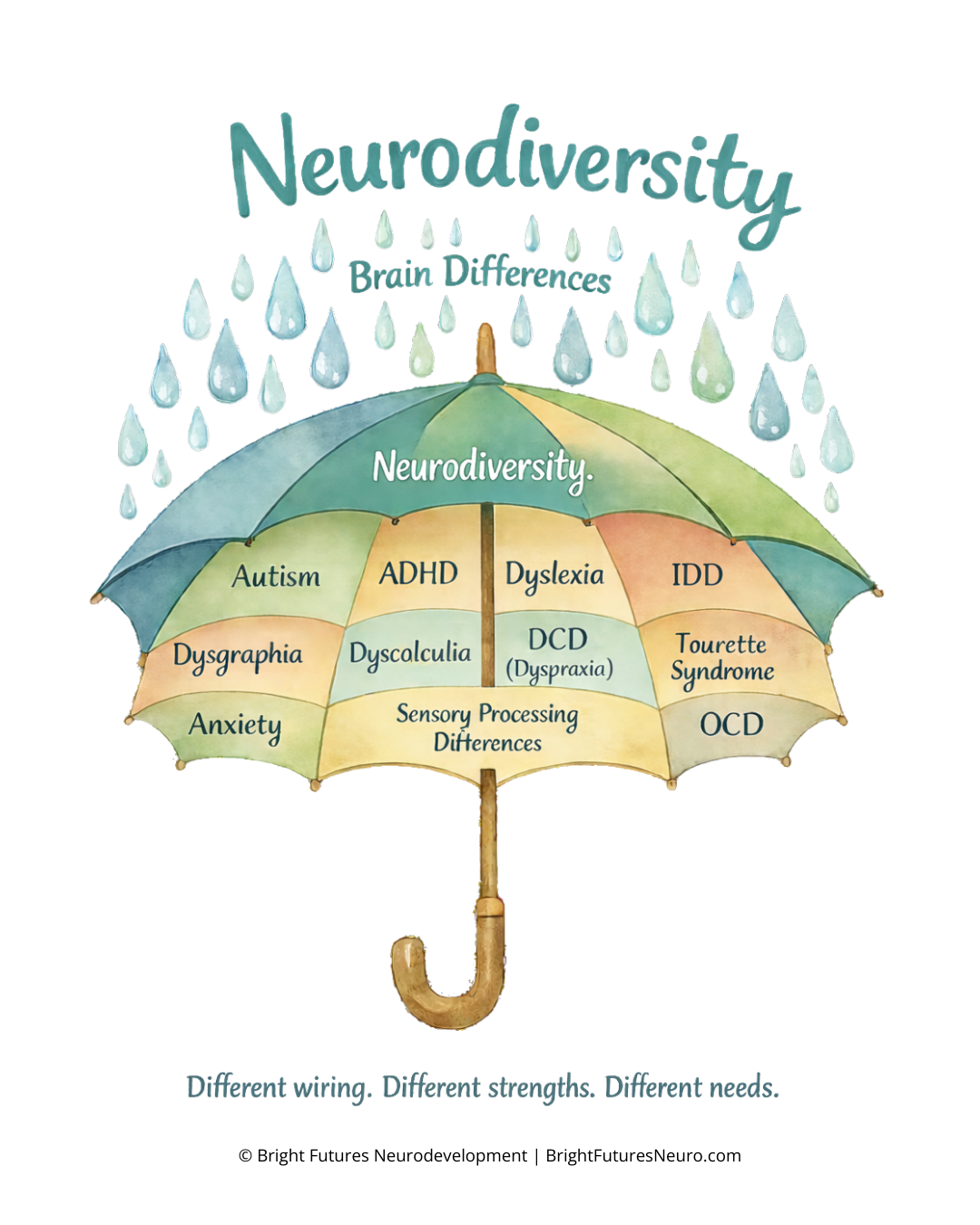
But the neurodiversity umbrella is much broader.
Neurodivergent neurotypes and diagnoses can include:
Autism
ADHD
Intellectual Developmental Disorder (IDD)
Dyslexia (reading differences)
Dysgraphia (writing differences)
Dyscalculia (math differences)
Developmental coordination disorder (Dyspraxia)
Tourette syndrome (Tic Disorders)
Obsessive Compulsive disorder (OCD)
Anxiety disorders
Mood Disorders
Sensory processing disorder (though not a formal DSM diagnosis, it reflects real nervous system differences)
Some children may have formal diagnoses. Others may simply show consistent traits of neurodivergent processing without meeting full criteria.
What Makes a Brain Neurodivergent?
Neurodivergence reflects differences in:
Nervous System Regulation
Some children’s nervous systems are:
More sensitive to sound, touch, movement, or light
Slower to warm up
Faster to react
More intense in emotional responses
This is not “bad behavior.” It is a regulation difference.
Executive Functioning
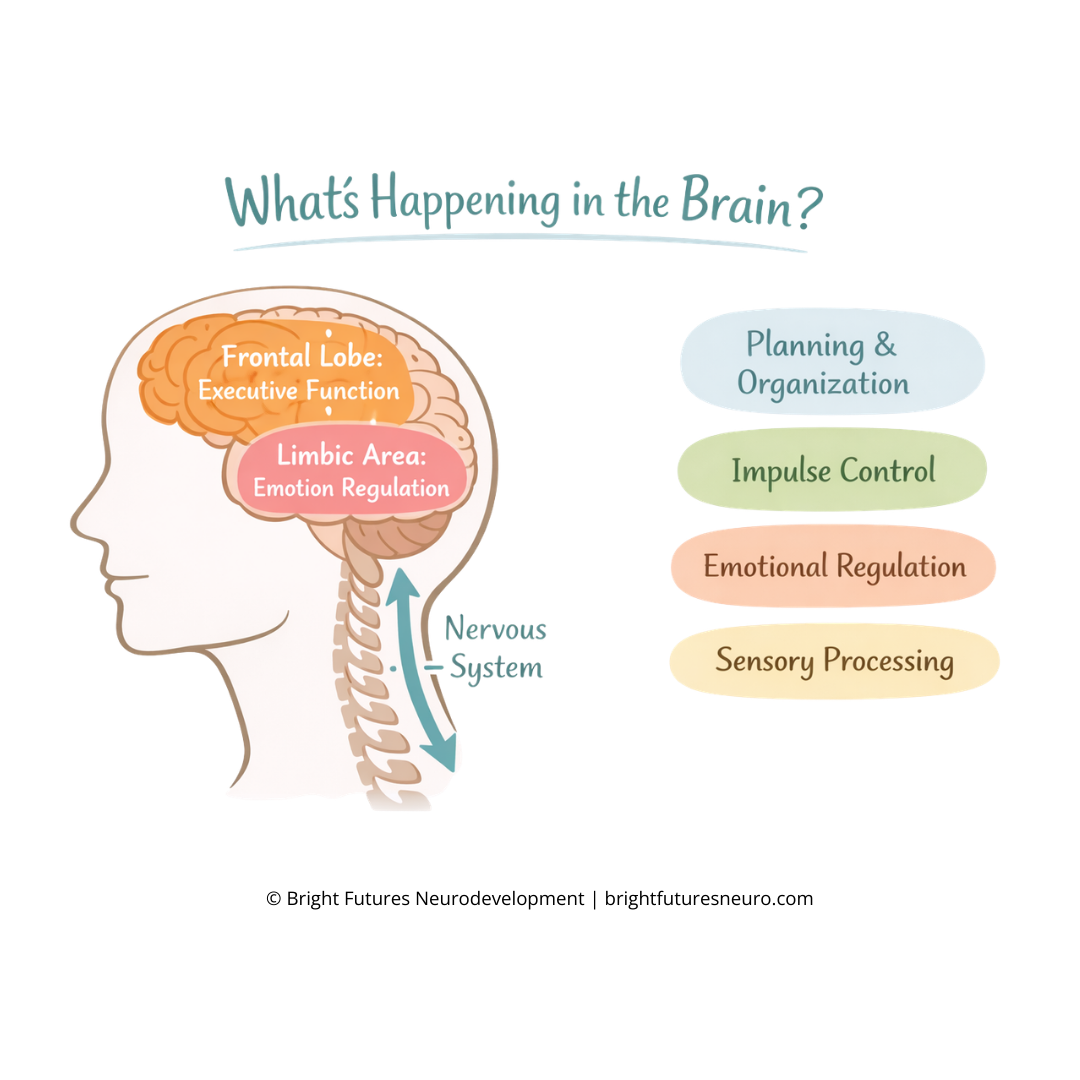
Executive functions are brain-based skills largely connected to the frontal lobe, including:
Planning
Organizing
Starting tasks
Shifting between activities
Managing time
Regulating impulses
Holding information in working memory
Many neurodivergent children struggle not because they “won’t,” but because their brain wiring makes it harder to “do” in expected ways.
Emotion Regulation
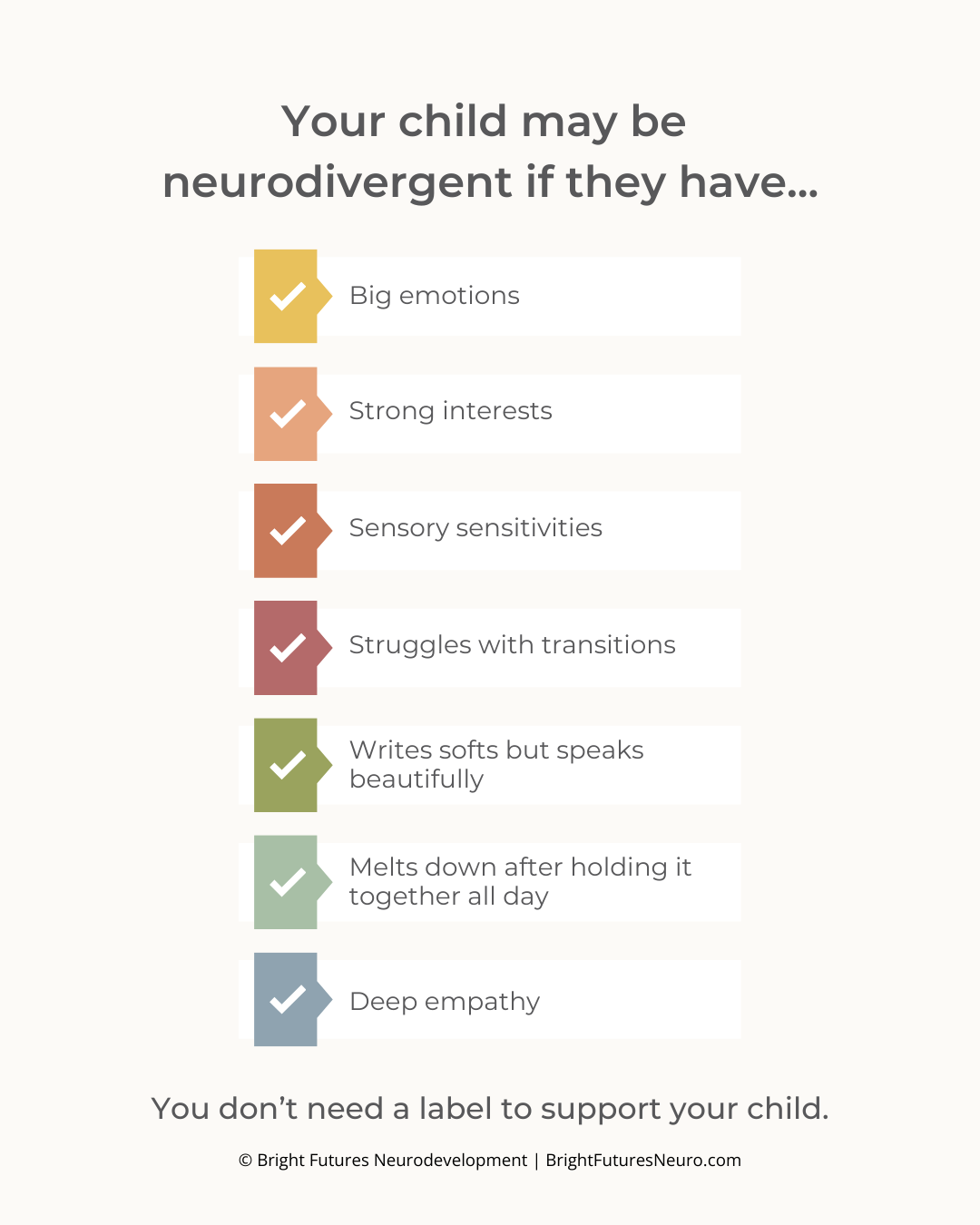
The brain systems that manage emotions and stress responses may be more reactive or slower to calm. This can look like:
Big feelings
Meltdowns
Shutdowns
Difficulty recovering after disappointment
High empathy and deep emotional insight
These are nervous system patterns — not character flaws.
“But My Child Doesn’t Seem Autistic or ADHD…”
This is something we hear often.
Neurodivergence is not a single “look.”
A child may:
Be socially interested but overwhelmed by noise
Be bright but struggle with writing
Be emotionally sensitive and deeply empathetic
Mask at school and unravel at home
Have strong focus in areas of interest but struggle with transitions
Neurodivergence exists on spectrums and across domains.
Many children fall under the umbrella even if they don’t fit stereotypes.
Strengths of Neurodivergent Brains
While support may be needed in certain areas, neurodivergent brains often bring incredible strengths:
Deep focus on interests
Creative problem-solving
Pattern recognition
Strong visual thinking
Innovation and outside-the-box ideas
High empathy and emotional depth
Passion and persistence
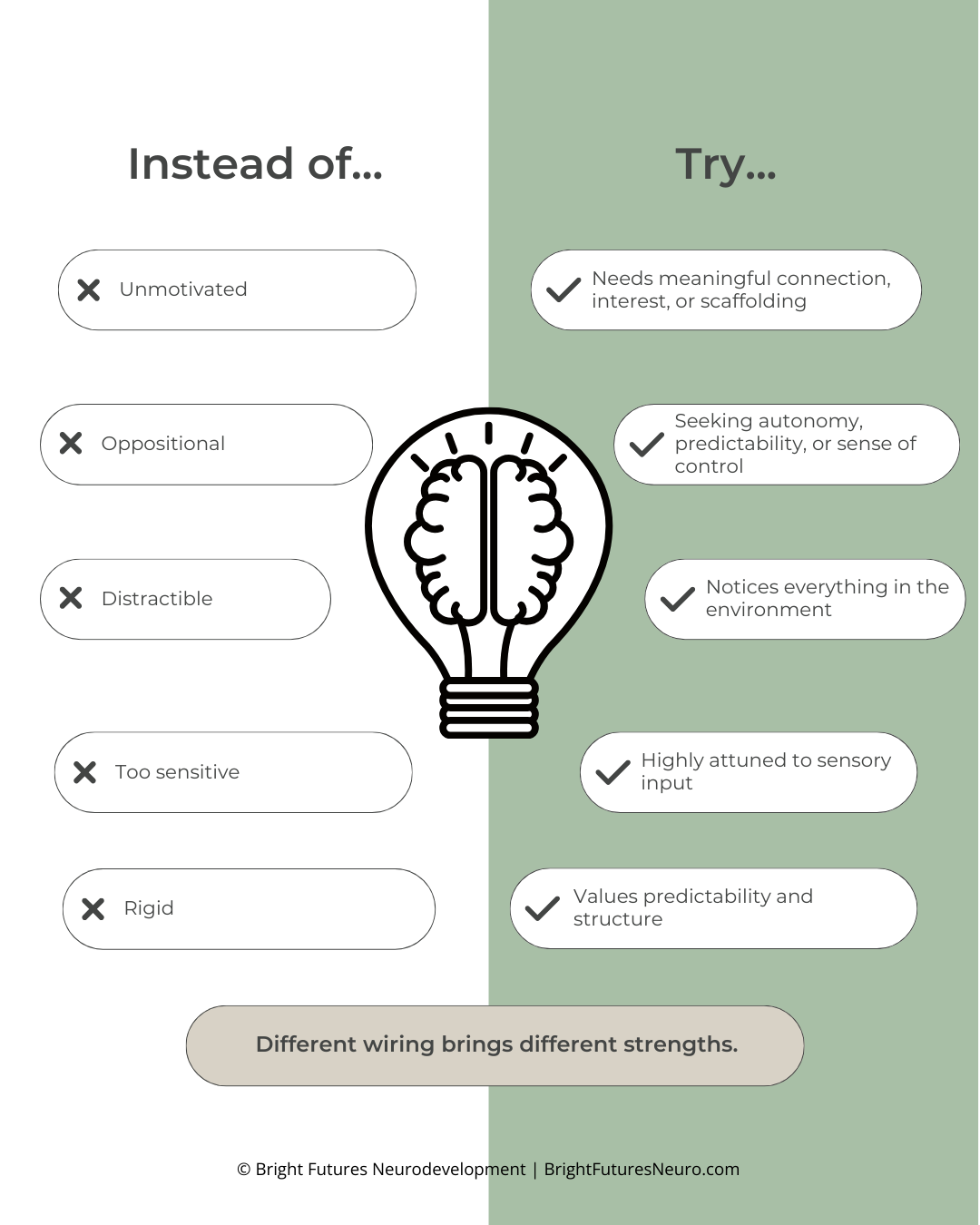
When we understand the nervous system underneath behaviors, we shift from:
“What’s wrong?”
to
“What does this brain need?”
Diagnosis vs. Educational Classification vs. Neurotype
These terms are often used interchangeably, but they are not the same.
Medical Diagnosis
A medical or psychological diagnosis (such as Autism spectrum disorder or Attention-deficit/hyperactivity disorder) is given by a qualified healthcare professional.
It is based on criteria in the Diagnostic and Statistical Manual of Mental Disorders and helps:
Understand a child’s developmental profile
Guide treatment and supports
Access insurance-based services
A diagnosis describes patterns of development and behavior — it does not define a child’s potential.
Educational Classification
Schools use educational eligibility categories to determine whether a child qualifies for special education services under federal law (such as IDEA).
A child may qualify under categories such as:
Autism
Other Health Impairment (often used for ADHD)
Specific Learning Disability
Emotional Disturbance
Developmental Delay (for young children)
Educational classification:
Is determined by a school team
Focuses on how a condition impacts learning
Does not require a medical diagnosis in all cases
May not match a child’s clinical diagnosis
The purpose is access to supports and accommodations — not labeling.
Neurotype
Neurotype is a broader, identity-affirming term.
It describes how a person’s brain naturally processes:
Information
Emotions
Sensory input
Attention
Executive functioning
A child can:
Have a medical diagnosis
Have an educational classification
Identify as neurodivergent
Or show neurodivergent traits without formal labels
These systems overlap — but they serve different roles.
The Big Picture
A diagnosis can open doors.
An educational classification can provide school supports.
Understanding your child’s neurotype helps you parent with clarity and compassion.
Our Perspective at Bright Futures Neurodevelopment
We view neurodivergence through a strengths-based, regulation-informed lens.
Children are not broken.
They are developing within their unique nervous systems.
When we…
Support regulation
Strengthen executive functioning skills
Build emotional awareness
Create predictable environments
Reduce shame
Children thrive.